
Last updated September 10, 2026
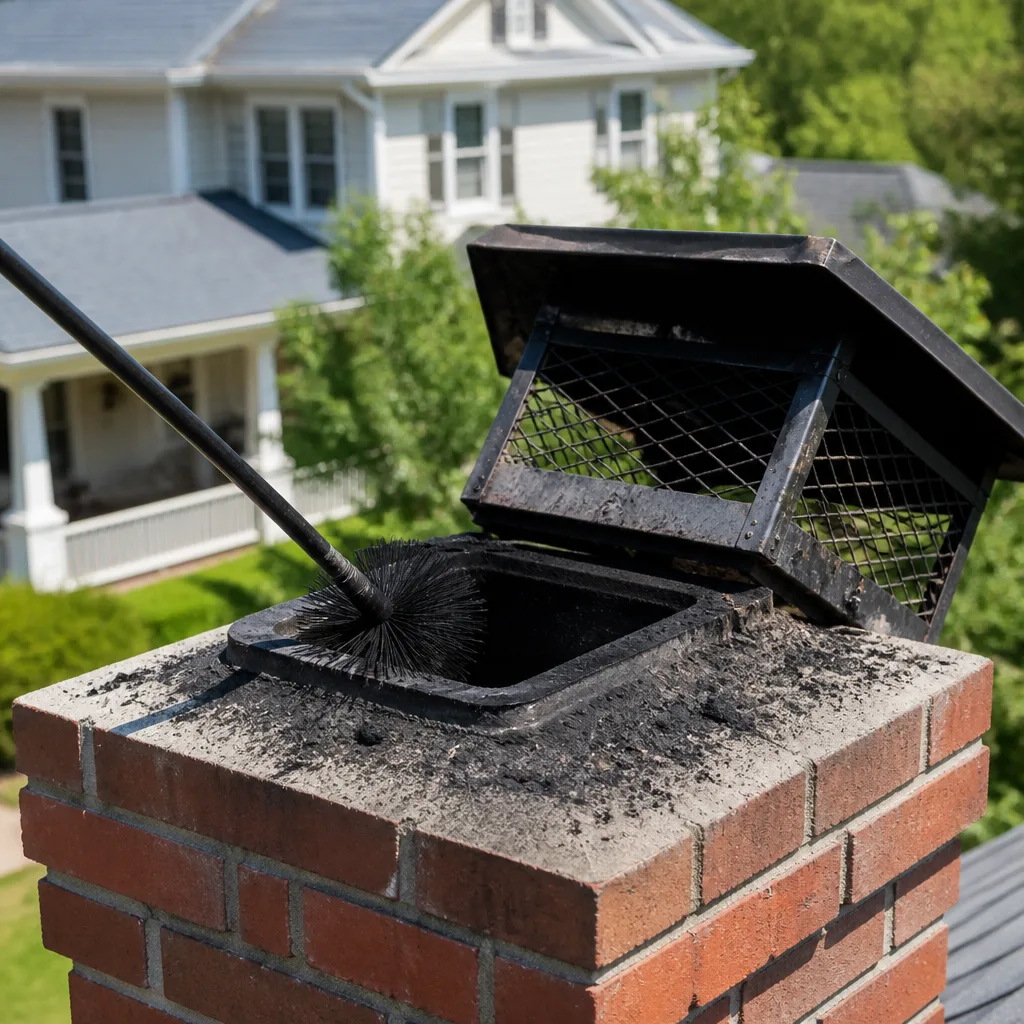
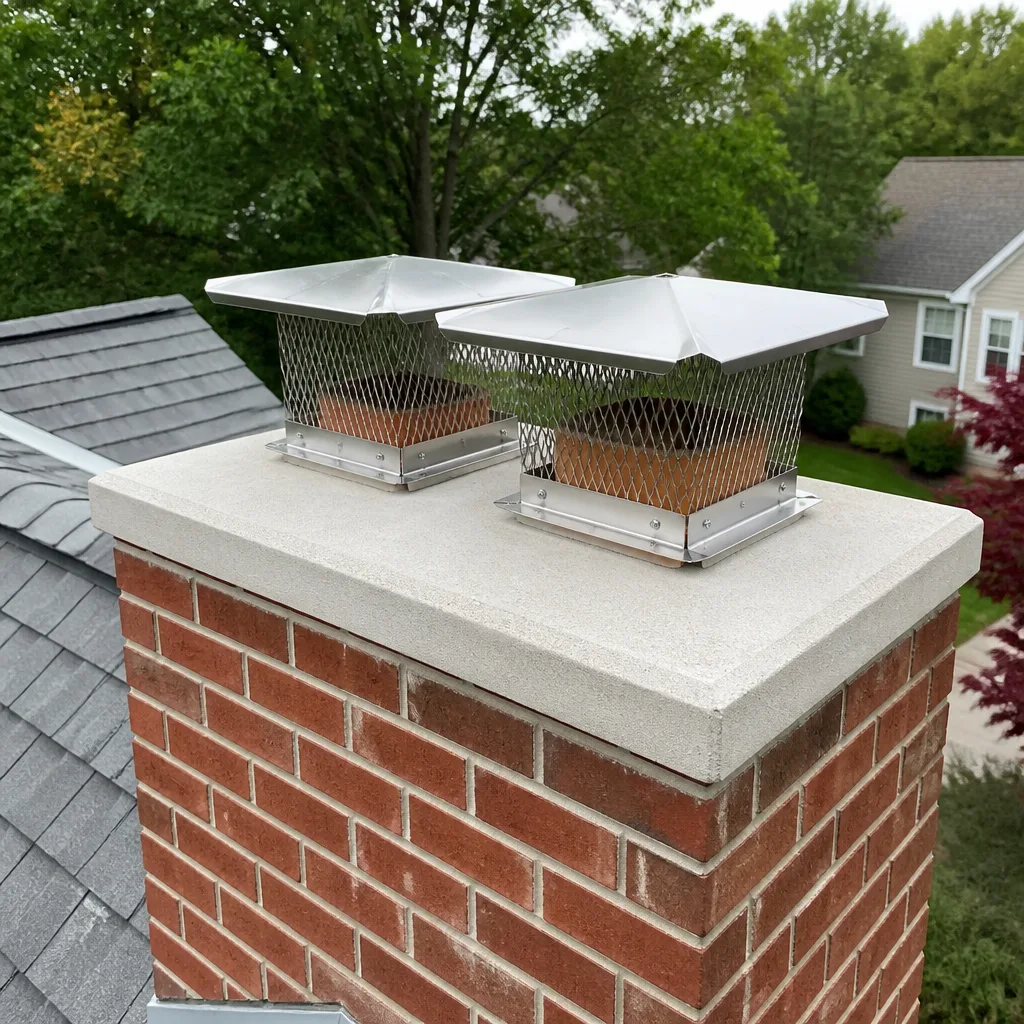
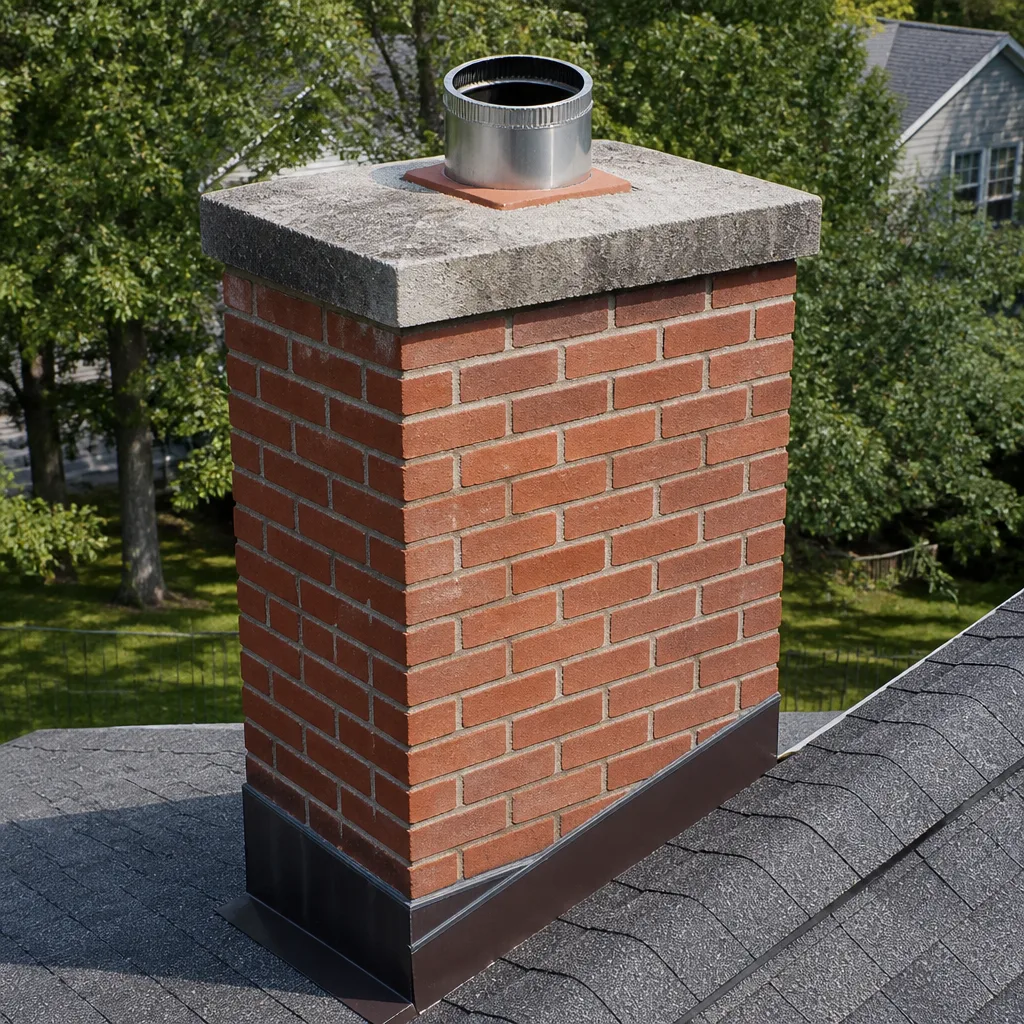
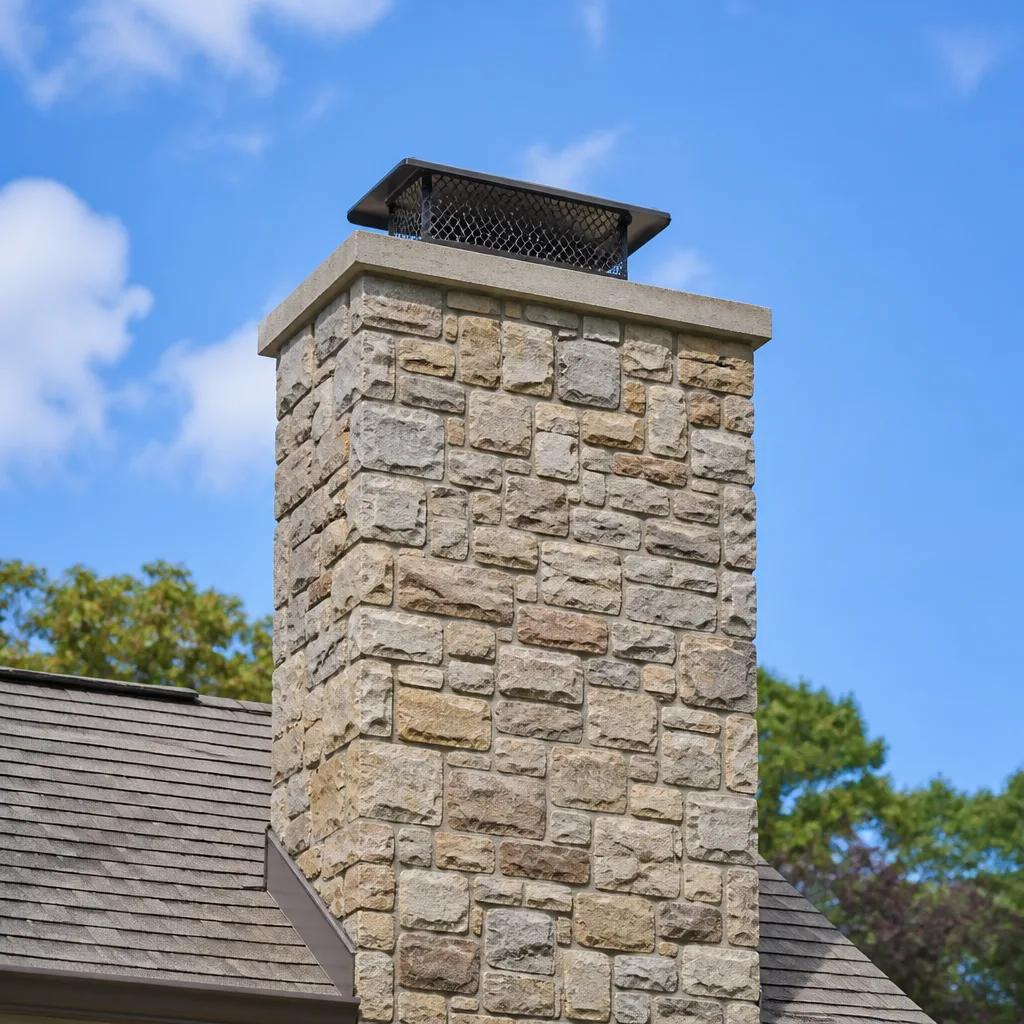
Level 1 sweep and inspection to the NFPA 211 annual standard - flue, crown, cap, and flashing checked and photographed
Chimney sweep logs do not sweep chimneys. They loosen some creosote - which then falls where a brush and vacuum still have to collect it.
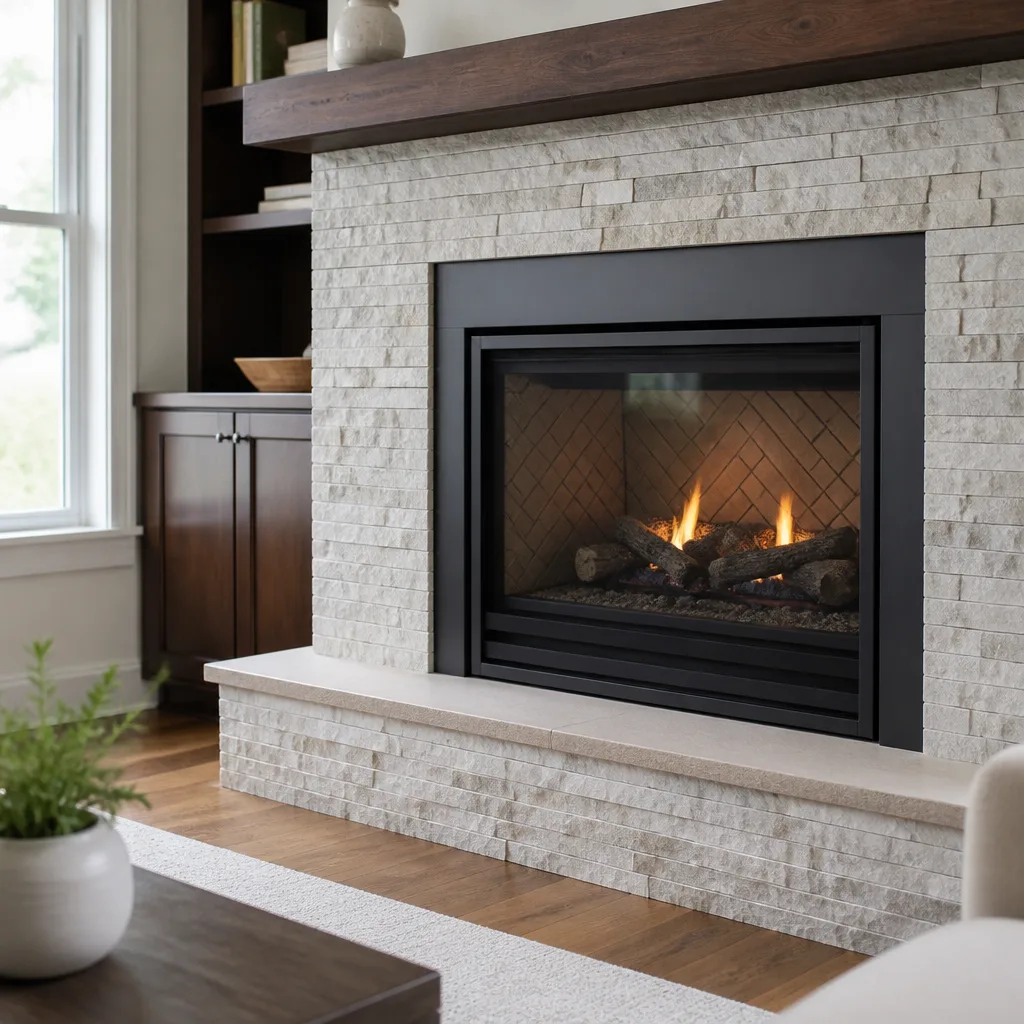
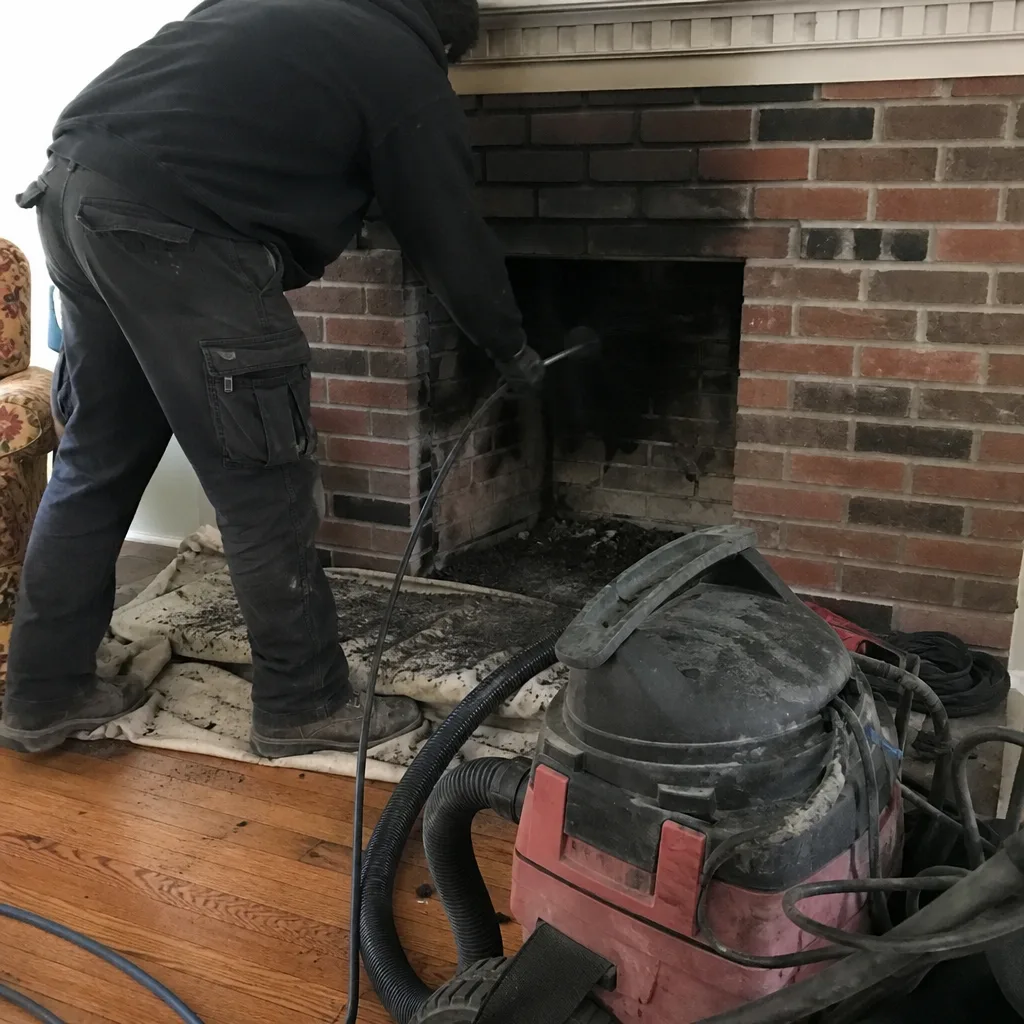 Before
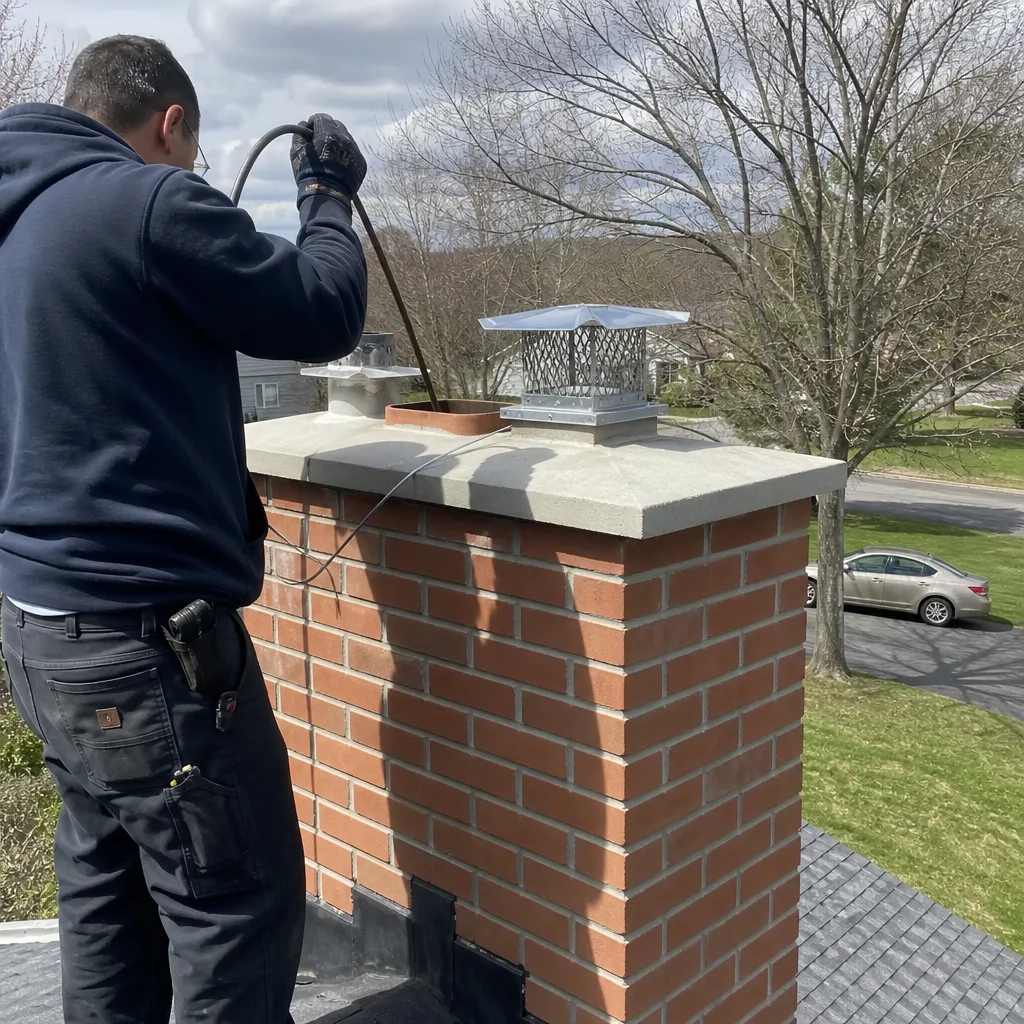 After
After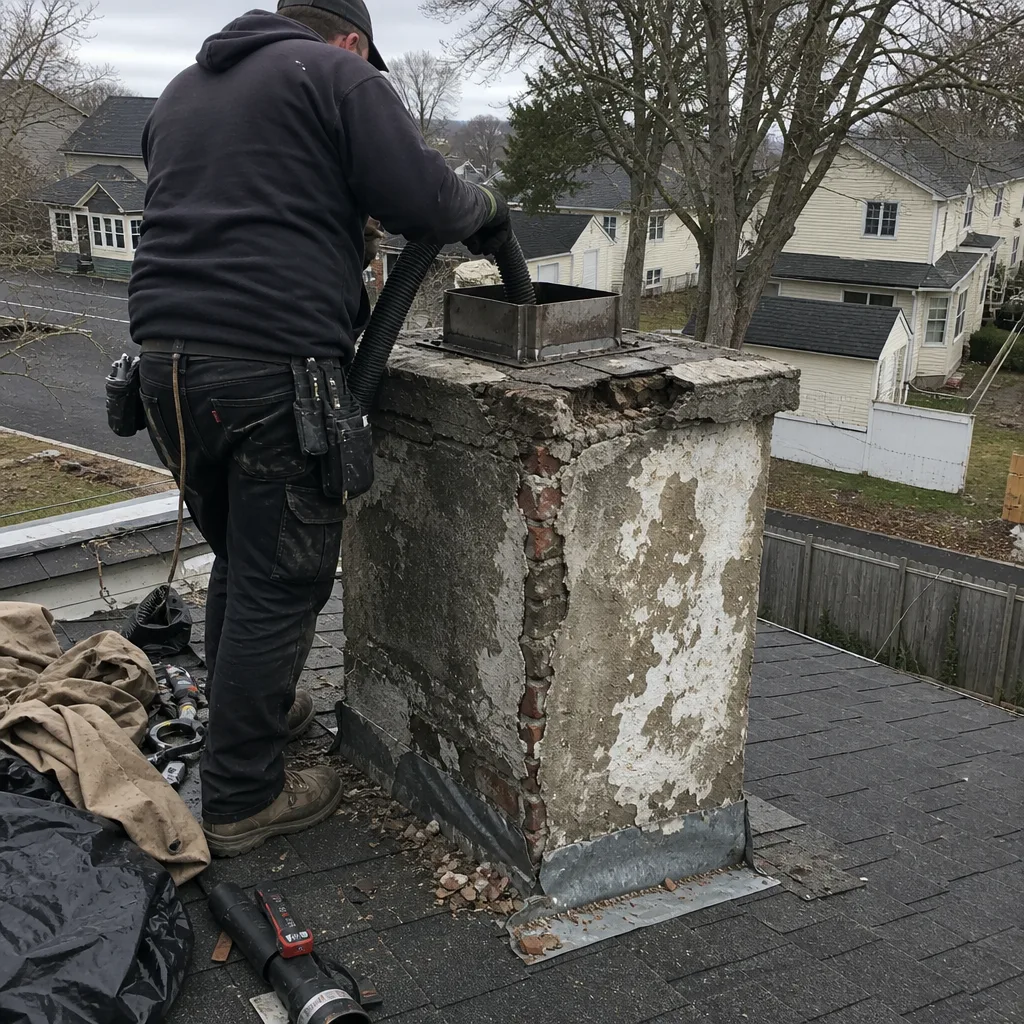 Before
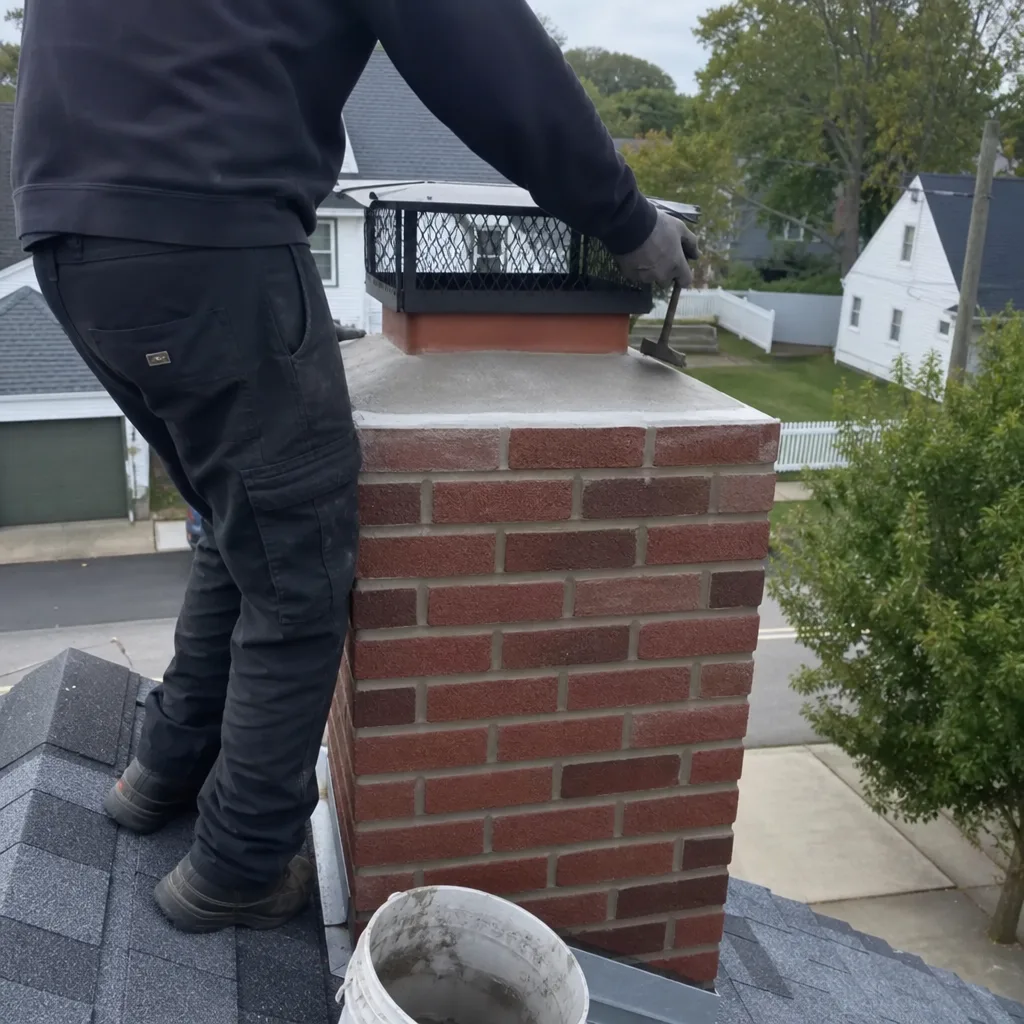 After
After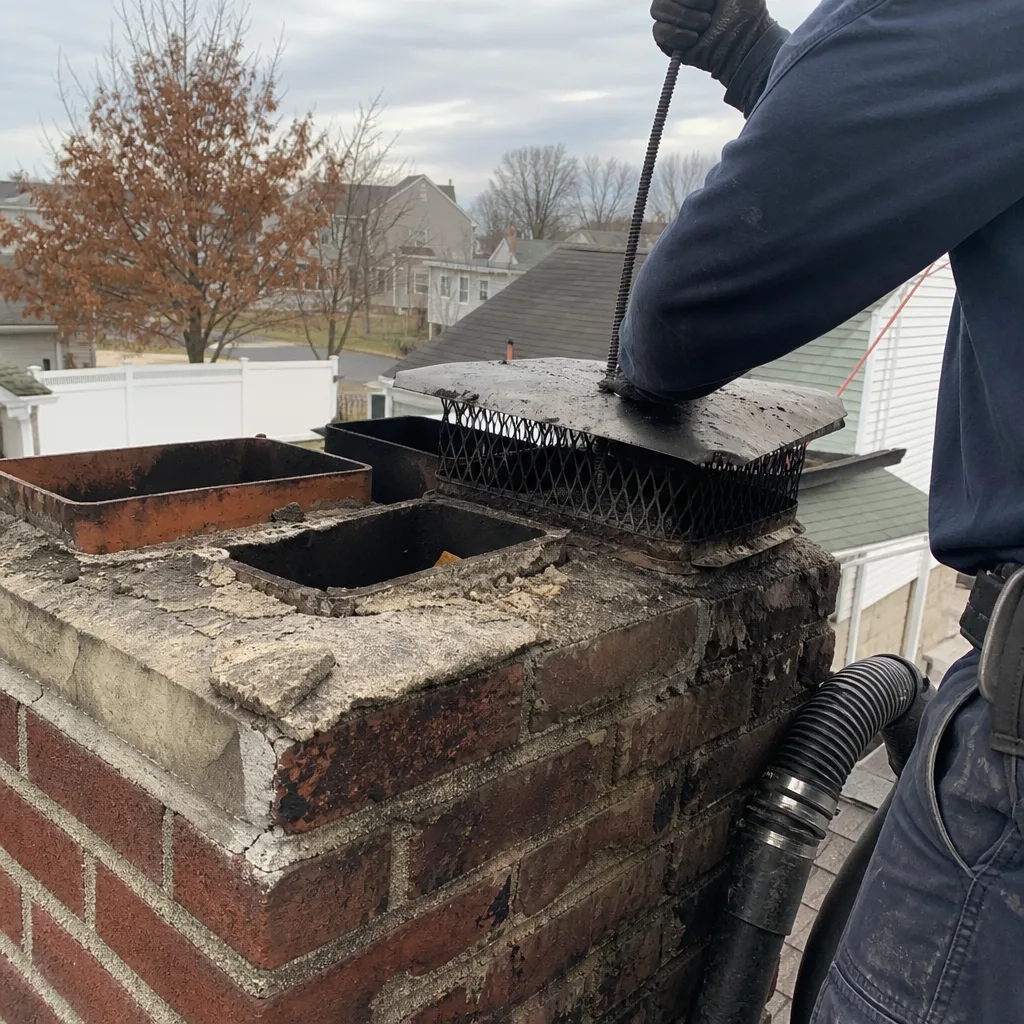 Before
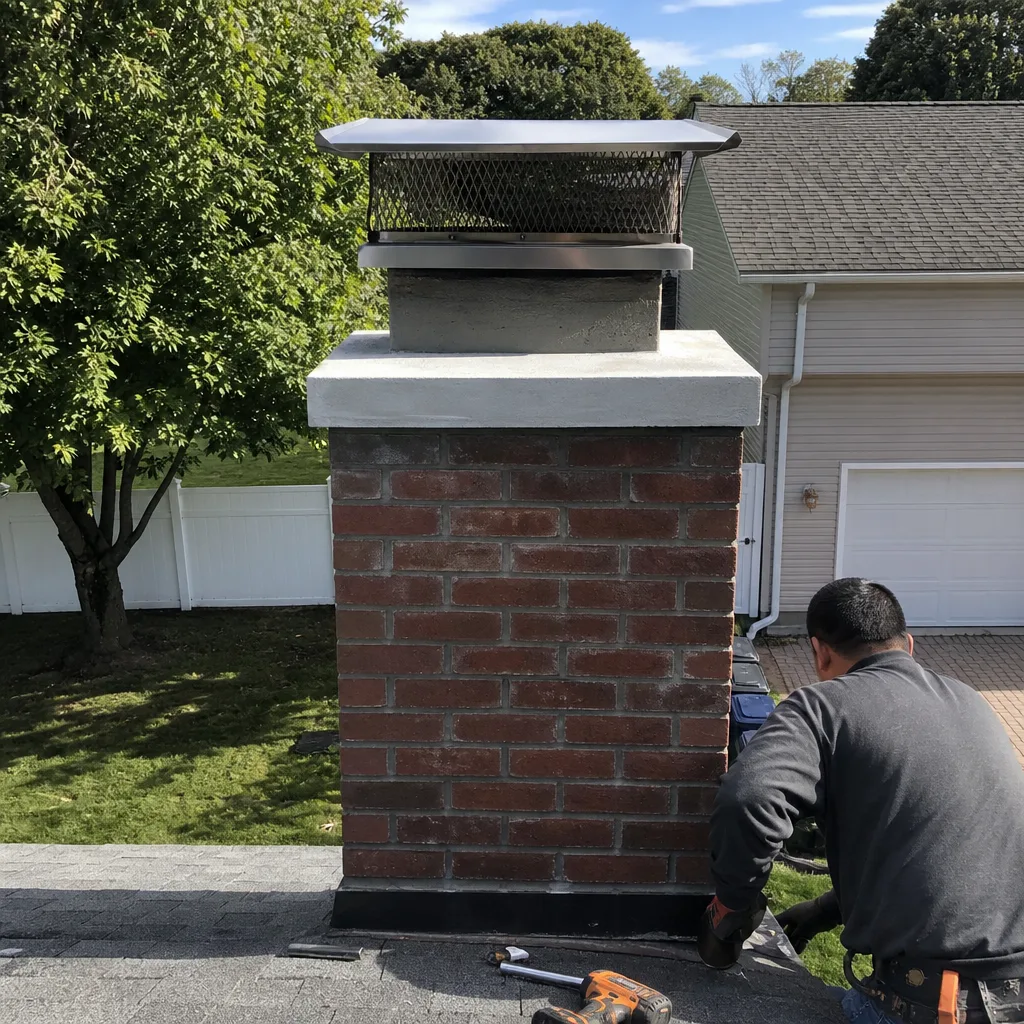 After
AfterChimney Cleaning & Sweep Maintenance Checklist for Freeport Homeowners
Most chimney checklists you’ll find online are written backwards. They tell you what to watch for after something has already gone wrong - smoke backing up, water stains on the ceiling, a chimney fire you smell before you see. A craftsman’s checklist runs the other direction. It’s built to catch the small thing before it becomes the expensive thing. In Freeport, where salt air off the Atlantic accelerates crown deterioration and freeze-thaw cycles in January can split a cap wide open, that sequence matters more than most homeowners realize. This guide gives you a working document sequenced the way a sweep actually moves through an inspection: what to check before the season starts, what to watch during burning season, what to document after every professional visit, and what to look for after every nor’easter rolls up the South Shore. For Chimney Cleaning Warning Signs: A Freeport Homeowner’s Reference Guide, see our companion post.
Quick Answer
A proper chimney maintenance checklist for Freeport homeowners covers four phases: pre-season exterior inspection (cap, crown, flashing), in-season usage logging and ash management, post-sweep documentation (photos, written verdict, warranty paperwork), and post-storm assessment after South Shore weather events. Most Freeport homes with wood-burning fireplaces need a Chimney Cleaning & Sweep with a Level-2 inspection annually, with heavy users (more than three fires weekly) needing attention every six months.
Table of Contents
- The Pre-Season Exterior Walk-Around: What You Can Check From the Ground
- In-Season Logging: The Habit That Saves You Money
- What Happens During a Professional Sweep Visit
- The Three Documents Every Homeowner Should File
- Post-Storm Checklist: After a Nor’easter Hits Freeport
- Freeze-Thaw Spalling: Freeport’s Most Overlooked Chimney Threat
- What You Can Check Yourself vs. What Requires a Sweep on the Roof
- Common Mistakes to Avoid
- When to Call a Professional
- Frequently Asked Questions
The Pre-Season Exterior Walk-Around: What You Can Check From the Ground
Every September, before the first fire of the season, walk the perimeter of your house with binoculars and a notepad. You’re not looking for subtle problems. You’re looking for obvious ones that have become dangerous while you weren’t paying attention.
Start with the chimney cap. In Freeport, where winter winds off Jamaica Bay drive rain horizontally, a missing or damaged cap is the single fastest route to water damage inside the flue. Look for:
- Visible rust streaks running down the chimney face from the cap
- Gaps between the cap and the flue tile where the mesh has pulled away
- Sagging or missing screening that would let squirrels, starlings, or raccoons enter
- The cap sitting crooked, which usually means the flue tile beneath has cracked
Next, the crown. This is the concrete slab that seals the top of the chimney between the flue tiles and the brick edge. In our experience across Freeport and the surrounding South Shore, crown damage is the most commonly missed pre-season warning sign. A hairline crack in September becomes a quarter-inch gap after three freeze-thaw cycles. Water gets in, freezes, expands, and pops the face off the brick below. By March, you’re looking at tuckpointing or rebuild work that could have been prevented with a $400 crown seal in the fall.
From the ground, you cannot assess crown integrity accurately. But you can spot the symptoms: pieces of concrete on the roof or in the yard, white efflorescence streaking down the brick (minerals left behind as water evaporates), and, most tellingly, a crown that looks thin or uneven from below. A proper crown should slope away from the flue and overhang the brick edge by at least two inches. If it doesn’t, or if you can’t tell, that’s a call to make.
Check the flashing where the chimney meets the roofline. In Freeport’s older neighborhoods - the sections south of Sunrise Highway with homes built in the 1940s through 1960s - flashing often consists of original step-flashing with decades of caulk layered on top. Look for lifted shingles, gaps in the caulk line, or rust stains on the roofing below the chimney. Water intrusion at the flashing doesn’t always show up inside right away. It can travel along the rafters and appear as a stain six feet away from the chimney.
Finally, scan the brickwork itself. Spalling - the face of the brick popping off - shows up as rough, pitted surfaces or actual debris on the ground. In Freeport, spalling accelerates where chimneys face southwest and catch the afternoon sun followed by rapid evening cooling, then winter freeze-thaw. We’ve replaced entire courses of brick in homes off North Main Street where the homeowner never noticed the spalling until a neighbor pointed it out.
In-Season Logging: The Habit That Saves You Money
The National Fire Protection Association recommends annual inspection for all chimneys, but the actual cleaning interval depends on how much you burn and what you burn. A Freeport homeowner who lights two fires a week with properly seasoned hardwood needs a sweep every year. The same homeowner burning unseasoned softwood or pressed logs daily may need attention every two to three months. The problem: most people cannot accurately report their burn frequency when the sweep asks.
We recommend a simple log. Not a journal, not an app - a piece of paper taped inside the fireplace tool cabinet or a note on your phone. Record:
- Date of each fire
- Approximate duration (under 2 hours, 2-4 hours, over 4 hours)
- Fuel type (seasoned oak, mixed hardwood, pressed log, unseasoned or questionable wood)
- Any performance issues (smoke in the room, difficulty starting, unusual odor, downdraft on windy days)
This log serves two purposes. First, it lets you give your sweep an accurate burn history, which determines how aggressively they need to clean and whether they should recommend a shorter interval. Second, it creates a record that protects you. If a sweep recommends work based on heavy creosote buildup and your log shows twelve fires all winter, that’s a conversation worth having. If your log shows sixty fires with pressed logs and the sweep finds glazed creosote, you’ll understand why they’re recommending a more intensive cleaning.
In Freeport, where many homes have original masonry fireplaces from the mid-century building boom, the flue dimensions were designed for the heating appliances of that era. Modern inserts and changed usage patterns mean those flues sometimes operate outside their original design parameters. A burn log helps your sweep correlate performance issues with usage patterns, not just inspect in isolation.
Between professional visits, manage ash correctly. Leave an inch of ash on the fireplace floor during burning season - it insulates the firebox and helps fires start faster. But don’t let ash build up above that inch, and never let it sit wet. Wet ash combined with the sulfur compounds in coal or certain woods produces lye, which corrodes metal firebox components and the damper. When you do remove ash, use a metal container with a tight lid, set it outside on concrete (never on a wood deck), and let it sit for at least three days before disposal. Embers can smolder for days.
What Happens During a Professional Sweep Visit
A proper sweep visit follows a sequence. Understanding that sequence helps you evaluate whether you’re getting a thorough job or a quick brush-and-go.
The technician should begin with an exterior assessment, even if you’ve already done your own walk-around. They’re looking for structural issues that affect how they’ll approach the interior work, and they’re verifying that the chimney is safe to use before they disturb anything inside. In Freeport, where many chimneys sit on gable ends exposed to prevailing winds, they’ll pay particular attention to lean, separation from the house, and signs of past water intrusion that might have compromised the liner.
Inside, the work area gets protected. Floors covered, furniture draped, a HEPA vacuum connected before any brushing begins. The damper gets inspected for proper operation and sealed in the closed position to prevent debris from falling into the firebox. Then the actual cleaning: rotary brushes or polypropylene whips on flexible rods, powered or manual depending on the flue type and condition. The goal is not cosmetic - a black flue is not necessarily a dangerous flue - but the removal of combustible deposits, particularly third-stage glazed creosote, which cannot be removed with standard brushing and requires chemical treatment.
For Freeport homes with factory-built metal chimneys, common in additions and renovated spaces, the sweep should inspect the chimney chase cover, the storm collar, and the termination cap as a system. These components fail in sequence: the chase cover rusts through, water enters the chase, the metal flue liner corrodes from the outside, and the homeowner doesn’t know until the liner fails inspection. We’ve found chase covers in Freeport’s newer construction off Merrick Road that were already rusting after eight years because the original builder used galvanized steel instead of stainless.
The sweep should finish with a Level-2 inspection if you haven’t had one in the past year. This means a camera inspection of the flue interior, looking for cracks, gaps, deterioration, and obstructions. The camera should be a self-leveling unit with a monitor you can see, not a flashlight and a mirror. You should see what the sweep sees. At Hearthstone Chimney Co. home, our Level-2 inspections end with photos you can keep and a plain-English verdict on what we found, what it means, and what your options are.
The Three Documents Every Homeowner Should File
After every professional visit, you should receive three items. If you don’t, ask for them. These documents are your protection against the two worst outcomes in chimney work: unnecessary repairs pushed on a trusting homeowner, and dangerous conditions left unaddressed because they weren’t documented.
1. Inspection photographs. Not a single photo of the chimney top, but a complete visual record: the crown from above, the flue interior at multiple depths, the firebox and damper, the smoke chamber, and any areas of concern. These photos should be dated and should include enough context that you or another professional can locate the same spot later. In Freeport, where homes change hands regularly and inspection records often don’t transfer, having your own photo file protects your investment and your safety.
2. Written verdict. A plain-English summary of findings, not a checklist of boxes with checkmarks. It should state what was found, what it means in terms of safety and function, what the recommended action is, and what the timeline is for that action. “Crack in flue tile at 12 feet” is a finding. “This crack allows combustion gases to enter the chimney structure and potentially the home. We recommend relining with a stainless steel liner. This can wait until spring if you discontinue use, or should be addressed before next burning season if you intend to use the fireplace” is a verdict. You deserve the second.
3. Warranty or guarantee paperwork. Any work performed should carry written terms. At Hearthstone Chimney Co., our Chimney Cleaning & Sweep in Freeport and all other services carry the 90-Day Done Right Promise - in writing, no arguing. If it’s not right, we come back. Other companies may offer different terms. Get them in writing, file them with your home records, and note the expiration date on your calendar.
Keep these documents in a dedicated file, physical or digital, with dates clearly marked. When you sell your home, prospective buyers and their inspectors will ask for maintenance history. When you call for service next year, having last year’s photos and verdict lets the new technician compare conditions and catch deterioration early.
Post-Storm Checklist: After a Nor’easter Hits Freeport
Freeport sits on the South Shore of Long Island, exposed to nor’easters that track up the Atlantic coast and deliver sustained winds, heavy rain, and coastal flooding. These storms test chimneys in ways that normal weather does not. After every significant storm, run through this checklist before lighting your next fire.
Exterior, from the ground:
- Check for displaced or missing chimney cap - high winds can lift poorly secured caps clean off
- Look for new cracks in the crown or fresh concrete debris on the roof
- Scan the roofline for lifted or missing shingles around the chimney flashing
- Check for leaning or shifted chimney structure - storm surge and saturated soil can affect foundation stability in low-lying Freeport neighborhoods
- Look for debris impact damage: tree limbs, wind-driven objects, or flooding debris that struck the chimney
Interior:
- Smell for dampness in the firebox - water intrusion may not be visible immediately but will produce a musty odor
- Check the damper for smooth operation; corrosion from moisture can cause binding
- Look for water staining on the firebox walls or hearth extension
- Test smoke draw by lighting a small piece of newspaper - sluggish draft may indicate a blocked or water-compromised flue
If you find any of these conditions, do not use the fireplace until a professional evaluates it. Water in the flue combined with creosote deposits creates acidic compounds that accelerate liner deterioration. A blocked flue from storm debris can force carbon monoxide into the living space. The risk is real and immediate.
In Freeport’s flood-prone areas, particularly south of Atlantic Avenue and in the sections near Freeport’s Nautical Mile, storm surge can affect chimneys even when the house itself appears dry. Saturated masonry freezes faster and spalls more aggressively. If your home took any water during a storm event, include the chimney in your post-flood professional assessment even if it looks fine from outside.
Freeze-Thaw Spalling: Freeport’s Most Overlooked Chimney Threat
Every winter, Freeport chimneys endure dozens of freeze-thaw cycles. Daytime temperatures rise above freezing, water in the masonry expands as it warms, then nighttime temperatures drop and that same water freezes, expanding by nine percent and exerting pressure that pops the face off brick and opens cracks in mortar and crown concrete.
The damage is not gradual. It happens in discrete events. A crown with no visible cracks in October can show quarter-inch gaps by March. Brick faces that were intact in January litter the ground after one hard freeze in February. The homeowner often doesn’t notice because the damage occurs at roofline, out of normal sight lines.
Prevention is straightforward but timing-critical. Crown sealing with a flexible, vapor-permeable product should happen in early fall, after the summer heat has passed but before nighttime temperatures drop below 40 degrees consistently. We use professional-grade crown sealants from HeatShield and Gelco that remain flexible through temperature extremes and allow moisture vapor to escape while blocking liquid water entry. Application in cold weather is ineffective - the product won’t cure properly, and you’ll be re-doing it in spring.
For brickwork already showing early spalling, the repair window is narrow. Once the face of a brick is lost, the interior soft core is exposed to accelerated weathering. Tuckpointing - grinding out damaged mortar and repointing with matching material - can extend chimney life by decades if done before structural integrity is compromised. In Freeport’s historic districts and in homes with original brickwork, color-matched mortar is essential for both appearance and function. The wrong mortar mix, too hard for the original brick, will cause the brick to spall faster as it takes all the stress the mortar should absorb.
After winter, inspect specifically for spalling damage. Use binoculars from the ground, or have a professional access the roof. Document what you find with dated photos. Compare year to year. Spalling that accelerates indicates a systemic water intrusion problem that needs addressing at the source - usually the crown, cap, or flashing - not just symptom treatment.
What You Can Check Yourself vs. What Requires a Sweep on the Roof
We believe in honest lines. There’s work a homeowner can do safely and well, and there’s work that requires training, equipment, and the judgment that comes from seeing thousands of chimneys. Drawing that line clearly earns more trust than pretending everything requires a professional.
From the ground, safely and accurately:
- Assess whether the chimney cap is present, straight, and intact
- Spot obvious spalling, missing mortar, or leaning
- Identify rust stains, efflorescence, or debris that suggests problems above
- Check firebox and damper operation
- Monitor burn patterns and maintain usage logs
- Detect smoke backup, unusual odors, or draft problems during use
Requires a professional on the roof or with specialized equipment:
- Crown integrity assessment - hairline cracks are invisible from below, and crown slope can only be verified from above
- Flashing detail inspection - lifted corners and nail pops hide under shingle overlaps
- Flue interior camera inspection - cracks, gaps, and creosote buildup are not visible from either end without a camera
- Smoke chamber and damper frame inspection - these require access and lighting most homeowners don’t have
- Chase cover and termination assessment on factory-built chimneys - the critical failure points are on top, not visible from below
- Structural assessment for lean, settlement, or separation from the house
The temptation to climb a ladder and check yourself is real, particularly for homeowners who handle other maintenance. We understand it. But chimney work involves heights on a structure not designed for access, often with deteriorated surfaces, and with the added risk that you’re assessing a system that vents combustion gases - errors have consequences beyond a fall. In Freeport, where many homes have aluminum siding that becomes slick with salt air residue and where winter winds gust unpredictably off the bay, the risk-reward calculation favors calling a professional for the roof-level work.
Common Mistakes to Avoid
- Waiting for visible smoke problems before calling. By the time smoke backs up into the room, you likely have a significant blockage or draft failure. Annual inspection catches problems before they reach this stage, particularly in Freeport’s older homes with original flue dimensions that don’t match modern usage.
- Assuming a gas fireplace needs no maintenance. Gas fireplaces and inserts still require annual inspection of the venting system, burner assembly, and safety controls. Debris in the termination cap, deteriorated gaskets, and failed thermocouples are common findings that create carbon monoxide risk without producing visible warning signs.
- Using the chimney as a ventilation shortcut. We’ve found dryer vents, bathroom exhausts, and even kitchen range hoods routed into chimneys in Freeport homes, particularly in renovations from the 1970s and 1980s. This is a code violation and a fire hazard. The chimney is a dedicated combustion gas exhaust, not a general utility chase.
- Ignoring the cleanout door. Masonry chimneys in Freeport’s pre-war homes often have a cleanout door at the base, in the basement or crawl space. Homeowners stack boxes in front of it and forget it exists. This door provides access to remove debris that falls from the flue, and its seal is part of the system’s draft performance. A missing or damaged cleanout door allows basement air infiltration and can create downdraft problems.
- Hiring based on the lowest price without verifying what’s included. A “$99 sweep special” that doesn’t include a Level-2 inspection, that rushes through in 45 minutes, or that uses a shop vacuum instead of a HEPA system is not a bargain. It’s a missed opportunity to catch the problem that costs you $3,000 next year. Ask what the service includes, how long it typically takes, and what documentation you’ll receive.
- Storing firewood against the house. In Freeport’s humid summers, firewood stacked against exterior walls traps moisture against siding and creates termite and carpenter ant pathways. It also tempts homeowners to burn unseasoned wood because it’s convenient. Store firewood 18 inches from the house, 6 inches off the ground, with top cover but open sides for airflow.
- Neglecting the chimney after switching to a fireplace insert. Inserts change how the flue operates. The reduced flue temperature can increase condensation and accelerate corrosion of an unlined or improperly lined chimney. An insert installed without a proper liner connection is a common finding in our Fireplace Services in Freeport inspections, and it’s a condition that worsens silently until the liner fails.
When to Call a Professional
Call a sweep immediately if you smell smoke in the house when the fireplace is not in use, if you see visible cracks in the firebox or flue tile, if water is entering the chimney or firebox, or if you’ve had a chimney fire - even a small one you extinguished yourself. These conditions do not improve with time.
Call before the burning season begins if your last inspection was more than twelve months ago, if you’ve changed your burning habits significantly, if you’ve purchased the home and have no maintenance records, or if you’re considering any fireplace modification including insert installation or gas conversion.
Call after any significant weather event that may have affected the chimney structure, and call if you notice any change in performance - harder starting, more smoke in the room, unusual odors, or draft that seems weaker than previous seasons.
Hearthstone Chimney Co. offers free estimates in Freeport. Our phones are answered by a live person 24 hours a day, 7 days a week. Call (631) 735-5125 to schedule, or to ask a question about something you’ve found during your own inspection. For more guides & resources, visit our blog. We’ll tell you honestly whether it needs immediate attention or can wait for your scheduled maintenance.
Frequently Asked Questions
A standard chimney sweep and Level-2 inspection in Freeport typically ranges from $250 to $400 for a single-flue masonry chimney, with factory-built metal systems and multi-flue structures running higher. The exact price depends on accessibility, creosote condition, and whether chemical treatment is needed for glazed deposits. Our $89 Seasonal Tune-Up covers basic maintenance for qualifying systems. Call (631) 735-5125 for an exact quote - estimates are free.
You need a new liner when the existing one is damaged, improperly sized, or missing - and only when that condition is documented with photos you can see. Cracked clay flue tiles, deteriorated mortar joints between tiles, and unlined masonry chimneys are all conditions that allow combustion gases to enter the home structure and increase fire risk. In Freeport’s older homes with original construction, unlined chimneys are still common. We don’t recommend replacement without camera evidence, and we’ll show you exactly what we found and explain your options, including when work can safely wait.
The National Fire Protection Association recommends annual inspection for all chimney systems, with cleaning frequency based on use. Most Freeport homeowners with occasional wood-burning use (one to two fires weekly during season) need a sweep annually. Heavy users (three or more fires weekly), those burning softwood or pressed logs, or anyone with a vented gas system showing performance changes should consider more frequent service. Your burn log helps determine the right interval for your specific usage.
Skipped maintenance leads to three predictable outcomes: creosote accumulation increases fire risk, water intrusion deteriorates masonry and liner, and performance problems worsen until they become safety problems. In Freeport’s climate, where freeze-thaw cycles accelerate damage and salt air corrodes metal components, the timeline compresses. A chimney that might last two years without attention in a milder climate may show serious deterioration in one. The cost of deferred maintenance is always higher than the cost of prevention.
Homeowners can handle ash removal, firebox cleaning, and basic damper maintenance. The actual flue cleaning and structural assessment require proper equipment and training. Rotary brushing systems, HEPA containment, and camera inspection equipment represent significant investment, and without them you’re guessing at conditions you cannot see. More importantly, without a professional evaluation, you have no documentation of chimney condition for insurance, resale, or warranty purposes. For the flue work, hire a certified sweep.
A sweep is the physical cleaning of the flue and firebox to remove combustible deposits. An inspection is the systematic evaluation of the entire system for safety and function. They often happen together, but they’re distinct services. You can inspect without sweeping (if the system is clean and unused), but you should not sweep without inspecting - the cleaning process can mask or worsen existing damage if not evaluated first. At Hearthstone Chimney Co., our standard service includes both, documented with photos and a written verdict.
The Bottom Line
A chimney maintenance checklist only works if you use it in sequence: exterior inspection before the season, usage logging during, professional documentation after, and storm assessment when weather demands. Skip a step and you create the blind spot where expensive problems grow. In Freeport, where salt air, freeze-thaw cycles, and coastal storms add stress that inland chimneys don’t face, that sequence matters even more. The homeowners we see with the lowest lifetime chimney costs are not the ones who found the cheapest sweep. They’re the ones who kept records, asked questions, and addressed small problems before the masonry required rebuild or the liner required emergency replacement. Done right - and we stand behind it.
Ready to schedule your inspection or have a question about something on this checklist? Call Hearthstone Chimney Co. at (631) 735-5125. A live person will answer, 24 hours a day, 7 days a week. We’ll give you a straight answer and a fair price, and we’ll document everything we find so you can see it for yourself.
Written by Russell Haines, Owner at Hearthstone Chimney Co., serving Freeport since 2014.