
Last updated September 10, 2026
Level 1 sweep and inspection to the NFPA 211 annual standard - flue, crown, cap, and flashing checked and photographed
Chimney sweep logs do not sweep chimneys. They loosen some creosote - which then falls where a brush and vacuum still have to collect it.
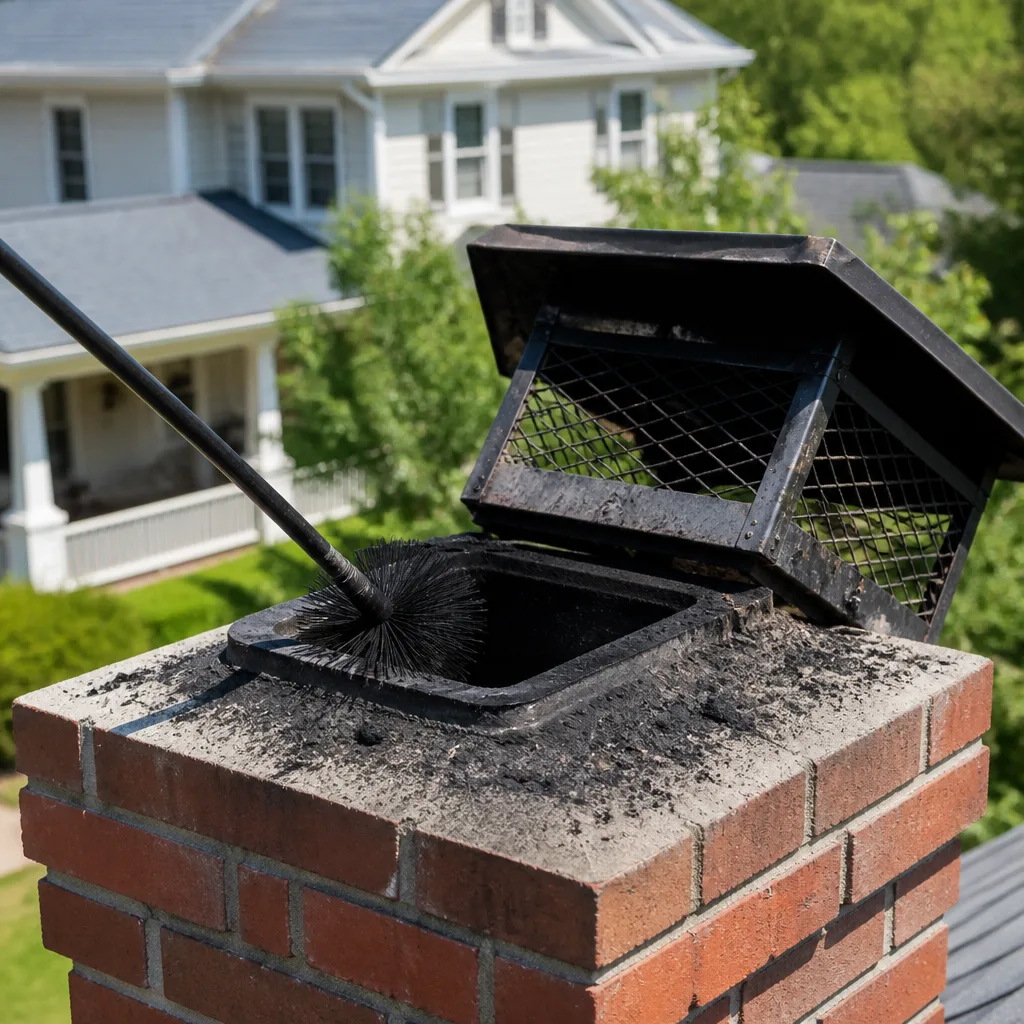
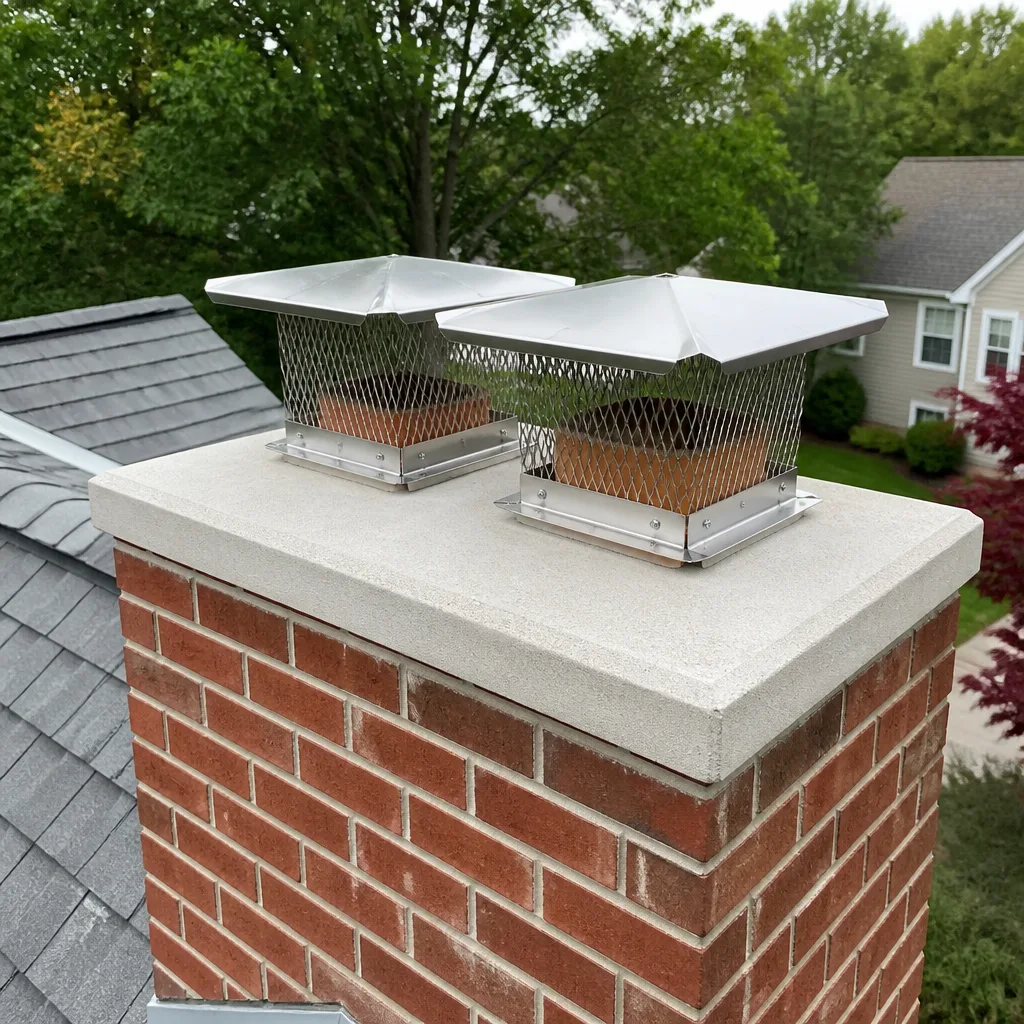
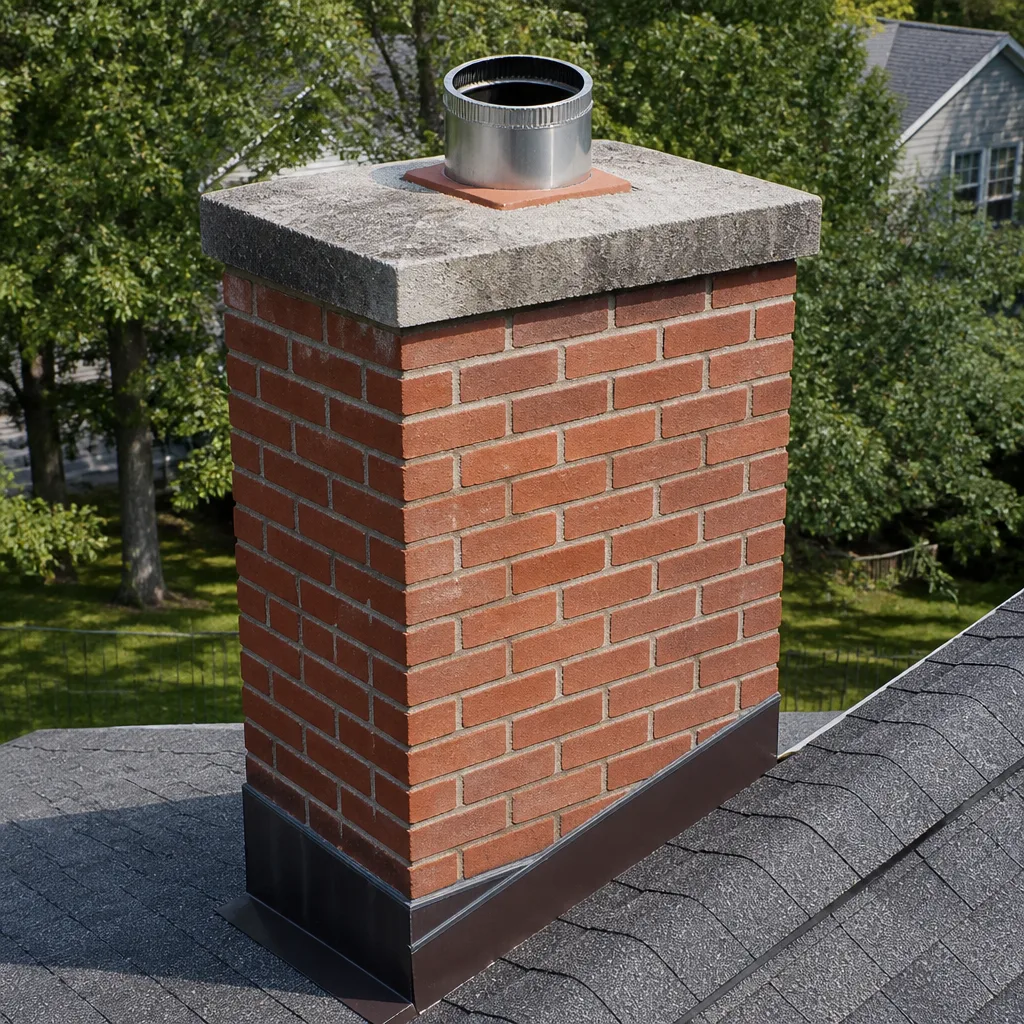
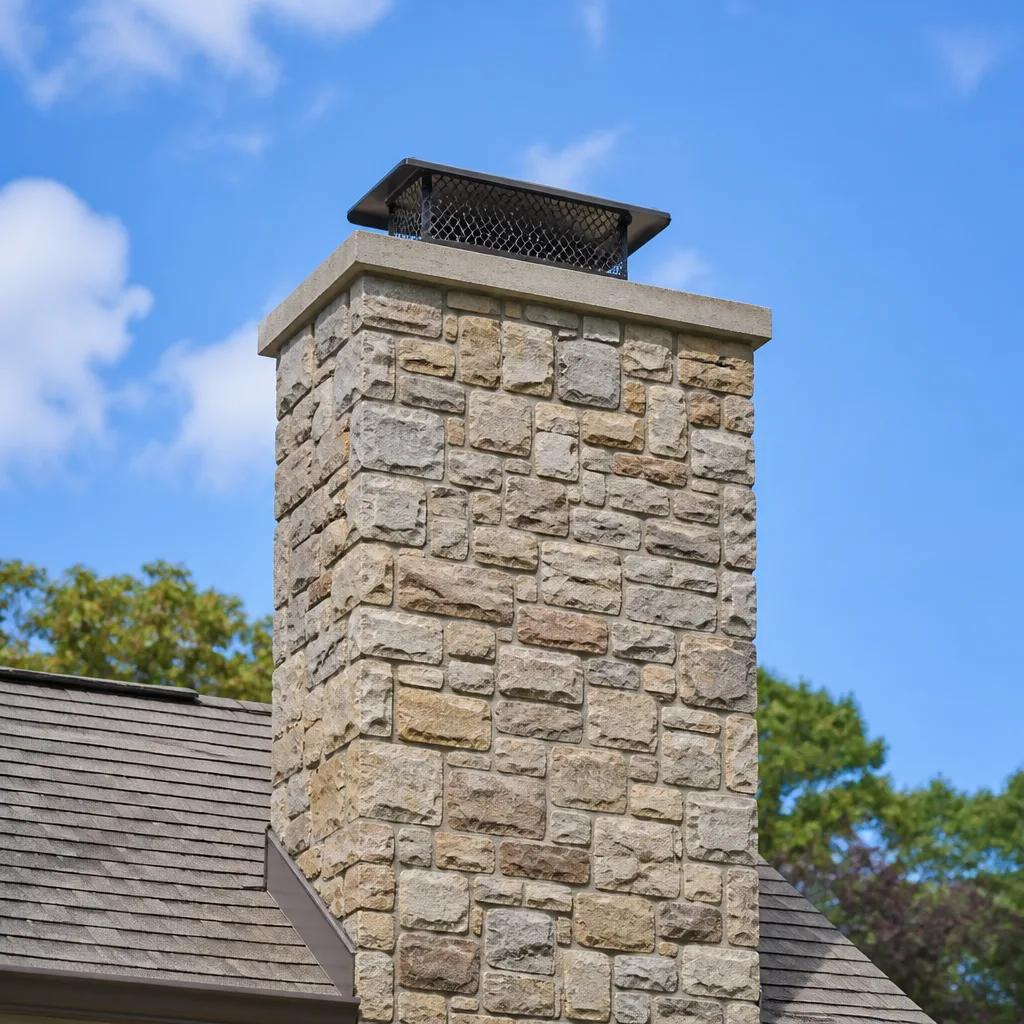
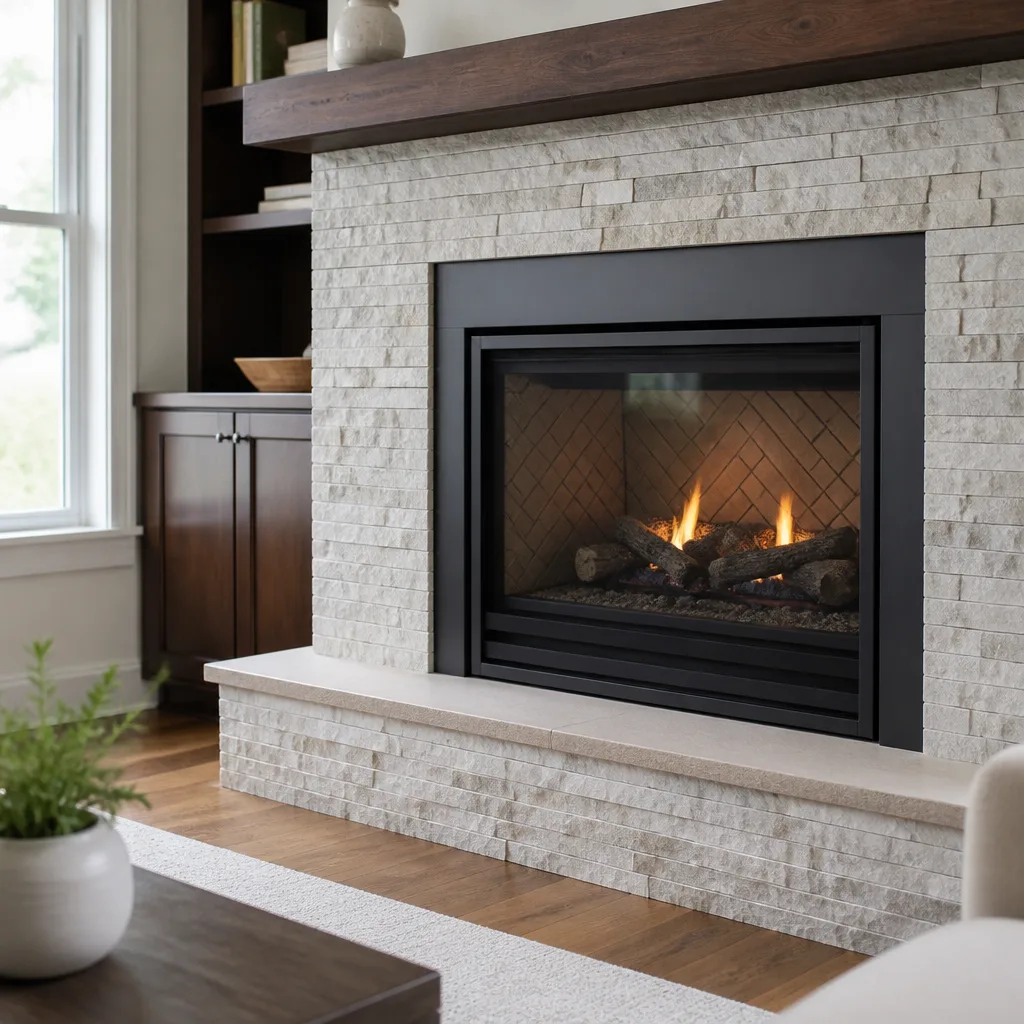
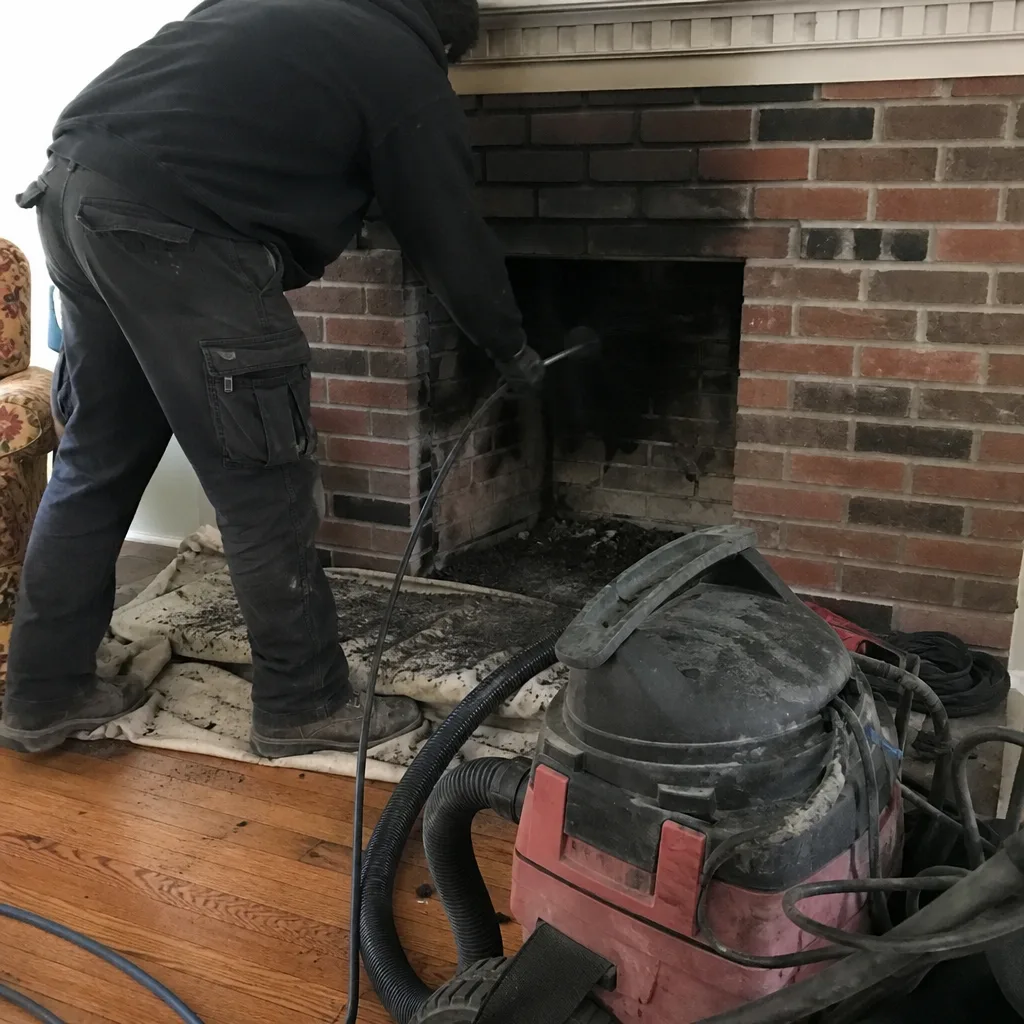 Before
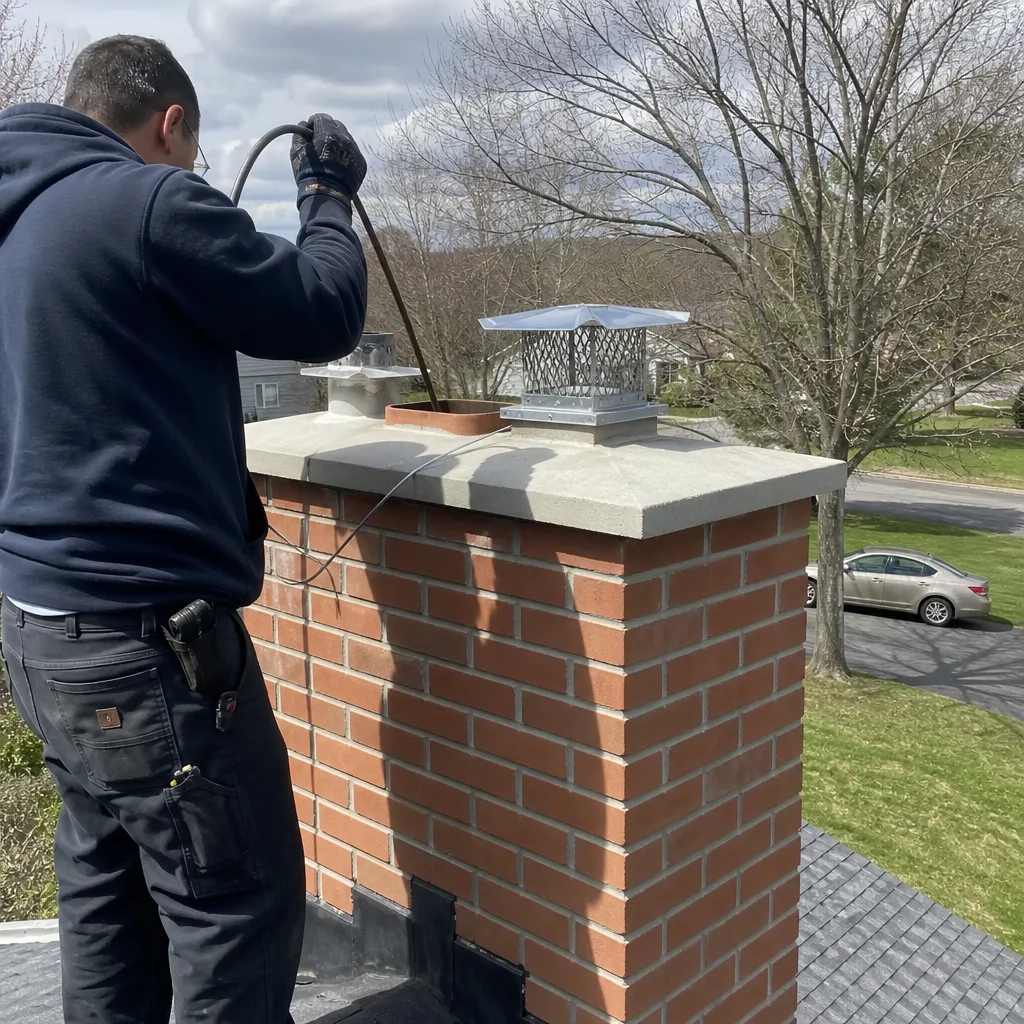 After
After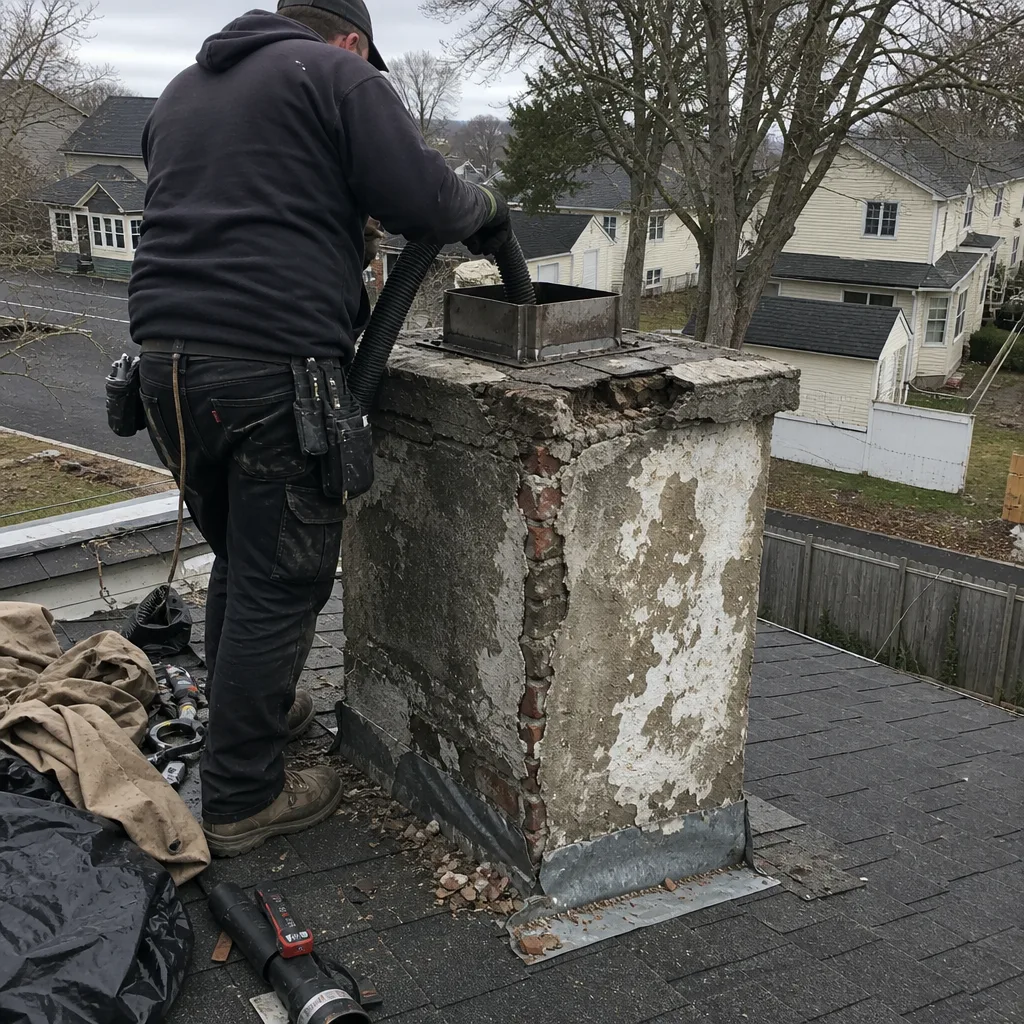 Before
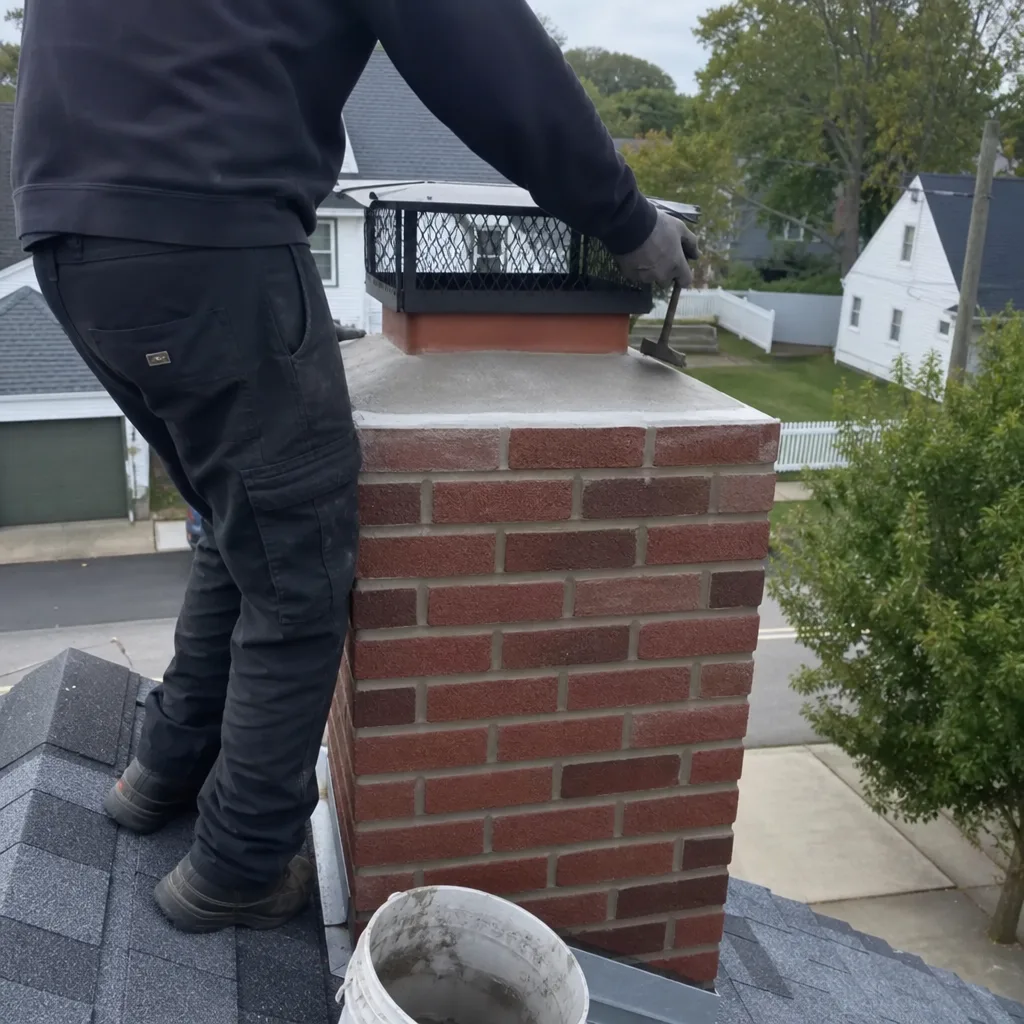 After
After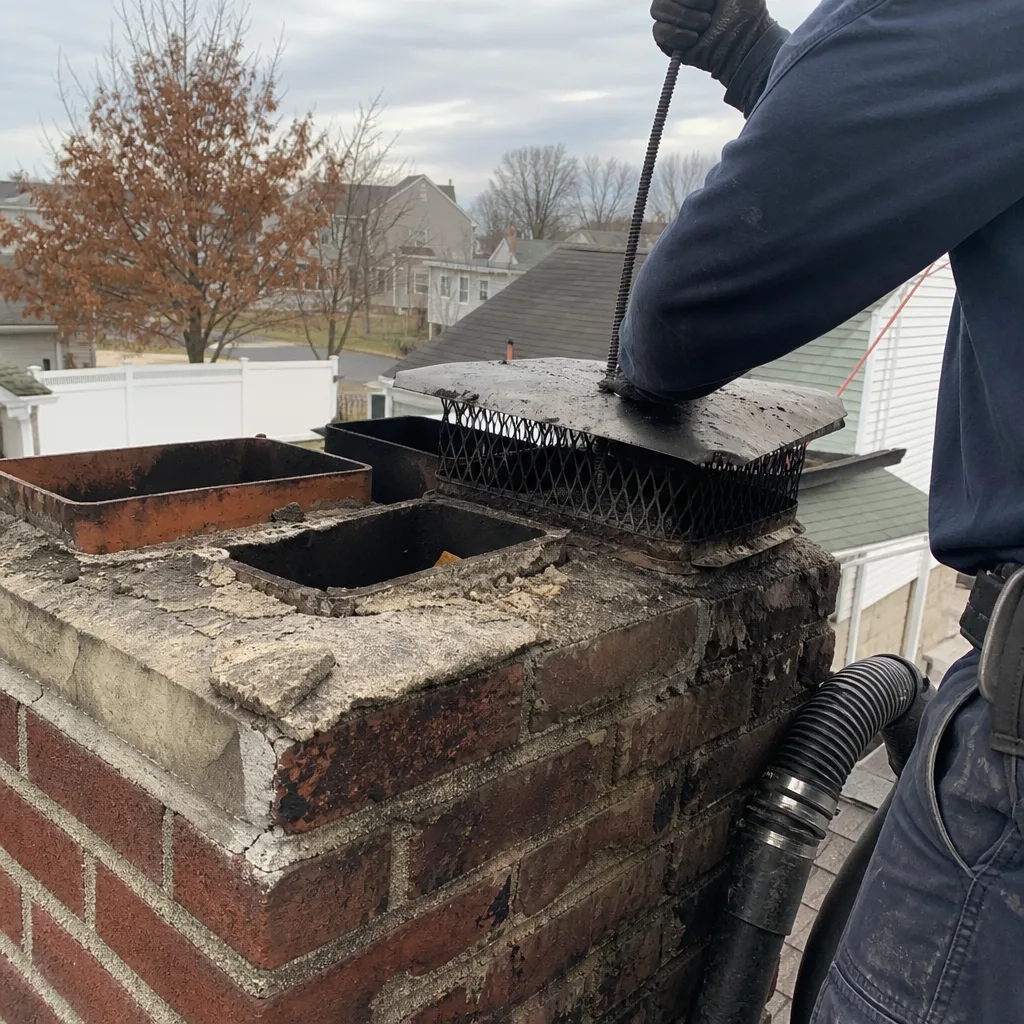 Before
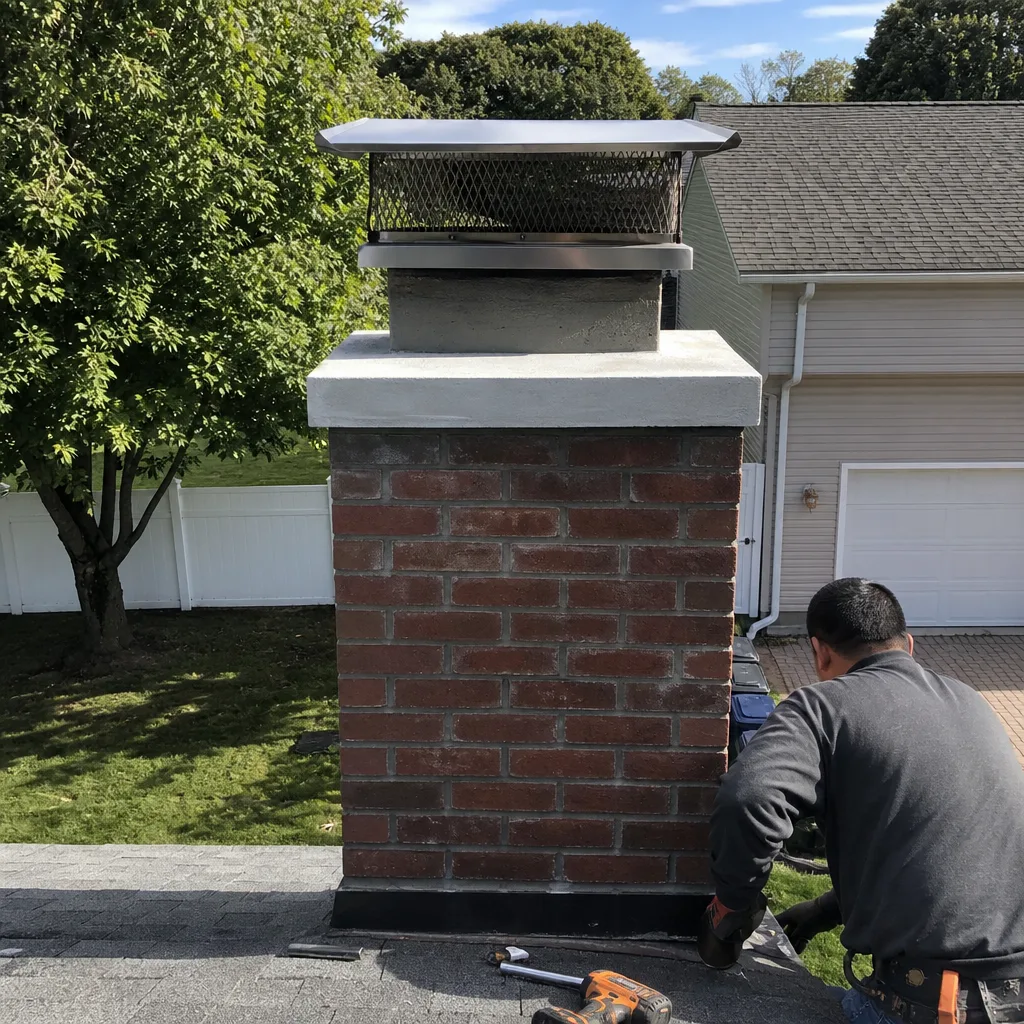 After
AfterChimney Cleaning Permits, Codes & Inspections in NY: What You Need to Know
A homeowner in Freeport recently had a fire insurance claim denied - not because the chimney wasn’t cleaned, but because a repair made two years earlier was unpermitted. The contractor had called it “maintenance.” The insurer called it a “structural modification.” The difference cost five figures. Most online guides treat chimney cleaning and chimney repair as the same regulatory category. They aren’t. In this guide, we’ll walk you through exactly where New York State draws the line between routine sweeping and permit-triggering work, what Nassau County specifically requires, and how to protect your home’s insurability.
Quick Answer
Chimney cleaning and sweeping in New York do not require a building permit. However, chimney repair, relining, rebuilding, or cap replacement typically do require permits under the New York State Building Code, and Nassau County municipalities including Freeport enforce these requirements through local code enforcement offices. Homeowners bear the liability for unpermitted work, not the contractor who performed it.
Table of Contents
- Routine Maintenance vs. Repair: Where the Permit Line Sits
- Nassau County Permit Requirements for Chimney Work
- What NFPA 211 Requires and How Freeport Enforces It
- How to Verify Prior Chimney Work Was Properly Permitted
- Homeowner’s Insurance, Documented Inspections, and Claim Protection
- Common Mistakes to Avoid
- When to Call a Professional
- Frequently Asked Questions
Routine Maintenance vs. Repair: Where the Permit Line Sits
The New York State Building Code, based on the International Building Code with state amendments, distinguishes sharply between maintenance and alteration. This distinction determines whether your chimney project needs a permit, an inspection, and documentation that your insurance company can later verify.
Routine maintenance - no permit required:
- Chimney sweeping and cleaning to remove creosote, soot, and debris
- Visual inspection of accessible components from the firebox and roof
- Minor crown sealing with brush-applied products
- Firebox brick repointing where no structural elements are modified
Repair or alteration - permit typically required:
- Chimney relining or flue replacement
- Removal or rebuilding of any masonry component
- Chimney cap or crown replacement (structural attachment)
- Damper repair or replacement
- Any modification to clearances to combustibles
- Installation of a new appliance connection
In our experience across Freeport and surrounding Nassau County communities, this is where homeowners get caught. A contractor suggests “we’ll just reline it while we’re here” during what was sold as a routine cleaning. The work gets done without a permit because neither party recognized the regulatory shift. Two years later, a fire, a sale, or an insurance review reveals the gap.
The New York State Department of State, which administers the uniform code, defers to local building departments for enforcement. In Freeport, the Building Department interprets relining as an alteration because it changes the appliance’s venting pathway and rated performance. We’ve seen this interpretation applied consistently since at least 2016.
Here’s the critical point: the homeowner is the permit holder of record, even when a contractor pulls the permit on their behalf. If the contractor skips this step, the violation attaches to the property, not the business. This becomes a title issue during sale and a coverage issue during claim review.
At Hearthstone Chimney Co. home, we document every recommendation in writing before any work begins. If we identify conditions during a Chimney Cleaning & Sweep in Freeport that cross into permit territory, we stop and explain the regulatory requirement. No surprises, no after-the-fact discoveries.
Nassau County Permit Requirements for Chimney Work
Nassau County operates under a town-and-village system where building code enforcement is localized. Freeport, incorporated as a village within the Town of Hempstead, maintains its own Building Department with specific procedures that differ from unincorporated areas.
Freeport-specific permit process for chimney work:
- Application submission: The homeowner or their licensed contractor submits a building permit application to the Freeport Building Department, located at 46 North Ocean Avenue. The application requires a detailed scope of work, contractor license verification, and often a diagram of the proposed modification.
- Plan review: For relining work, the department reviews manufacturer specifications for the proposed liner. Freeport requires UL-listed products with documentation. We regularly submit specifications for DuraFlex and Olympia Chimney liners, both of which carry the necessary listings and are accepted without complication.
- Fee structure: Permit fees in Freeport scale with project valuation. A typical chimney relining permit runs between $150 and $400 depending on liner length and appliance type. Masonry rebuild permits, involving structural modification, start higher and require engineered drawings for substantial work.
- Inspection scheduling: Freeport requires two inspections for most chimney alterations: a rough inspection before closure (liner insertion, clearance verification) and a final inspection after completion. The village uses a 48-hour scheduling window; inspections occur Tuesday through Saturday.
- Certificate of completion: Upon passing final inspection, the property receives a certificate that should be filed with other home improvement records. This document is what insurance adjusters request during claim review.
Who pulls the permit matters legally. A properly licensed home improvement contractor in Nassau County can pull permits on behalf of the homeowner, but the homeowner remains ultimately responsible for compliance. We’ve encountered situations in Freeport’s northeast neighborhoods near Randall Avenue where previous owners used unlicensed workers who never obtained permits. The current owner discovers this during pre-sale inspection, often with closing delayed or repair credits demanded.
Freeport’s coastal climate adds another layer. Salt air accelerates exterior masonry deterioration, particularly on chimneys facing south or southwest toward the Atlantic. This means cap and crown replacement - permit-triggering work - is more frequent here than inland Nassau County locations. The Building Department is familiar with this pattern and scrutinizes crown rebuilds for proper slope and overhang specifications to prevent recurrence.
One detail competitors rarely mention: Freeport requires contractor registration renewal annually, not biennially like some neighboring villages. A contractor pulling permits in March with a February expiration creates a permit invalidation risk. We verify our registration status before every application.
What NFPA 211 Requires and How Freeport Enforces It
The National Fire Protection Association Standard 211, “Chimneys, Fireplaces, Vents, and Solid Fuel-Burning Appliances,” is referenced throughout the New York State Building Code. It is not itself a law, but it becomes enforceable when adopted by reference into state or local code. Freeport has adopted the state code in full, making NFPA 211 requirements binding within village limits.
Key NFPA 211 provisions affecting Freeport homeowners:
- Annual inspection requirement: Chimneys, fireplaces, and vents shall be inspected at least once a year. This is the standard we apply during every Chimney Cleaning & Sweep in Freeport - not merely cleaning, but documented condition assessment.
- Level 1, 2, and 3 inspections: NFPA 211 defines three inspection levels. Level 1 is visual, appropriate when no changes have occurred. Level 2 requires camera examination of internal flue surfaces and is mandatory upon sale, after chimney fire, or when any appliance is changed. Level 3 involves demolition of building components and is reserved for suspected hazards requiring full access. Freeport’s Building Department recognizes Level 2 camera documentation as satisfying permit application requirements for relining work.
- Clearance to combustibles: The standard specifies minimum distances between chimney surfaces and adjacent framing, typically two inches for masonry chimneys in most configurations. Freeport inspectors measure this during rough inspection with mirrors and probes. We’ve found clearance violations in older Freeport homes, particularly in the pre-war stock near Babylon Turnpike, where original construction predates current standards.
- Liner sizing and material: NFPA 211 requires liners properly sized for the appliance served, with specific material restrictions based on fuel type. Gas appliances require aluminum or stainless steel; wood and oil require stainless steel or equivalent. Famco and Copperfield components we install meet these specifications with manufacturer documentation we provide for permit packages.
Freeport’s enforcement approach is educational rather than punitive for first-time violations, but this does not extend to insurance consequences. A village inspector may issue a correction notice with 30 days to comply. An insurance adjuster reviewing a fire claim, however, faces no such restraint in denying coverage based on code non-compliance.
The interaction between NFPA 211 and local enforcement creates a documentation standard we consider essential. Our Level-2 camera inspections end with photos the homeowner can see and a plain-English verdict - documented like an engineer, explained like a craftsman. These records satisfy NFPA 211’s inspection requirements and provide the paper trail insurers increasingly demand.
In Freeport’s flood-prone areas, particularly south of Merrick Road, we’ve observed accelerated deterioration of chimney bases due to historical water intrusion. NFPA 211’s inspection requirements are especially critical here, as hidden damage to the chimney structure can compromise liner integrity without visible exterior signs.
How to Verify Prior Chimney Work Was Properly Permitted
Discovering unpermitted work on a home you’ve owned for years, or one you’re considering purchasing, is more common than most Freeport residents assume. The good news: permits are public record, and verification is straightforward if you know where to look.
Step-by-step permit verification for Freeport properties:
- Contact the Freeport Building Department directly: Call (631) 735-5125 or visit in person at 46 North Ocean Avenue. Provide your property address and request a permit history search. There is no fee for this service, though response times vary; in-person requests typically yield same-day results.
- Request a full property file: Ask specifically for “all permits issued for chimney, fireplace, or heating appliance work.” General permit searches may miss minor permits filed under roofing or mechanical categories if the clerk uses broad search terms.
- Review permit details against work performed: Each permit lists scope of work, contractor name, issue date, and inspection outcomes. Compare this to your knowledge of work done. A permit for “chimney repair” with no final inspection indicates incomplete compliance.
- Request certificate of completion or occupancy: Final inspection approval generates a certificate. If this is missing, the work was not legally completed even if a permit was issued.
- Check contractor license status at time of permit: Nassau County consumer affairs maintains contractor license records. A permit pulled by an unlicensed contractor at the time of application is void regardless of other compliance.
If you discover unpermitted work:
Do not panic, but do not ignore it. Freeport offers a path to legalization through the Building Department’s “after-the-fact” permit process. This requires exposing work for inspection, which for chimney relining may mean removing the liner for visual verification - a significant expense. Alternatively, if the work was performed recently and by a still-operating contractor, you may have recourse through Nassau County consumer affairs or small claims court for the cost of legalization.
We’ve assisted numerous Freeport homeowners in this situation, particularly those in the vintage housing stock near Seaman Avenue and Walnut Street. The pattern is consistent: previous owner, quick sale, unpermitted “update” that looked fine until someone looked closer. Our Chimney Repair in Freeport includes permit verification as a standard step before quoting any work, because we won’t attach our name to a project built on someone else’s regulatory shortcut.
One practical tip: photograph every permit and certificate you obtain, store copies in cloud backup, and keep physical copies with your home’s permanent records. Freeport’s Building Department, like many municipal offices, has experienced record gaps during system migrations. Your documentation may be the only proof available.
Homeowner’s Insurance, Documented Inspections, and Claim Protection
The insurance landscape for chimney-related claims has shifted measurably in the past decade. Where carriers once paid fire claims with minimal investigation, modern claim review includes systematic verification of maintenance records, permit compliance, and professional inspection history. This shift directly affects Freeport homeowners, particularly in older homes with complex chimney service histories.
How insurers now evaluate chimney-related claims:
- Maintenance documentation review: Adjusters request sweeping and inspection records for the 24 months preceding a claim. Annual NFPA 211-compliant inspections carry weight; self-reported “we cleaned it ourselves” does not.
- Permit verification for any repair work: As the opening example illustrates, insurers increasingly treat unpermitted structural modifications as policy violations. The specific language varies by carrier, but most standard HO-3 policies include a requirement that the property be maintained “in accordance with applicable building codes.”
- Professional service provider verification: Work performed by unlicensed or uninsured contractors may be excluded from coverage even if the work itself was competent. Carriers maintain databases of known fraudulent operators.
- Pre-existing condition exclusions: Damage attributable to long-term neglect - cracked flues, deteriorated liners, uncleaned systems - may be classified as maintenance failure rather than sudden peril.
Structuring your records for claim protection:
We recommend Freeport homeowners maintain a dedicated chimney file - see our Chimney Cleaning & Sweep Maintenance Checklist for Freeport Homeowners - with the following, in chronological order:
- Annual Level-1 or Level-2 inspection reports with dated photographs
- Sweeping receipts with technician identification
- Permit copies for any alteration work, with final inspection certificates
- Manufacturer documentation for liners, caps, or other installed components
- Contractor certificates of insurance on file at time of work
- Correspondence regarding any recommended repairs and homeowner decisions
The last item is particularly important. If a professional inspection recommended relining and the homeowner declined, the insurer may characterize subsequent damage as foreseeable and excluded. Documentation of informed decision-making - even when declining work - protects against this interpretation.
Our 90-Day Done Right Promise includes written documentation of all findings and recommendations for exactly this reason. In writing, no arguing - if it’s not right, we come back. But the initial documentation also serves as evidence of due diligence should questions ever arise.
Freeport’s proximity to the coast affects insurance considerations specifically. Some carriers apply windstorm deductibles or exclusion riders that interact with chimney damage claims. A properly documented, code-compliant chimney system is easier to defend as unrelated to excluded perils than one with permit gaps or inspection lapses.
For homeowners in Freeport’s flood zones, particularly those who experienced Superstorm Sandy impacts, we note that FEMA flood policies and standard homeowner’s policies treat chimney damage differently. Foundation-level flooding that compromises chimney bases requires separate documentation from fire or wind claims. Our inspection reports specify observed waterline evidence and foundation conditions to support appropriate claim categorization.
Common Mistakes to Avoid
- Assuming cleaning and repair are the same regulatory category. They aren’t. A sweep is maintenance; a liner is alteration. The permit requirement changes at that line, and treating them as equivalent exposes you to liability.
- Letting a contractor “handle the permit” without verifying it was actually pulled. We’ve encountered Freeport homeowners who paid permit fees that were never submitted, or who were told a permit wasn’t needed when it clearly was. Request the permit number and verify it with the Building Department before work begins.
- Discarding inspection reports after “nothing was wrong.” The report that finds no defects is as valuable as one that finds them. It establishes a baseline and demonstrates ongoing maintenance. Insurers request these during claim review.
- Buying a home without chimney permit verification. Freeport’s active real estate market moves quickly, but skipping permit history review during due diligence can leave you with thousands in unexpected legalization costs. Make this a standard inspection contingency.
- Assuming village code matches neighboring municipalities. Hempstead Town’s unincorporated areas, Baldwin, and Rockville Centre each have slightly different permit thresholds and inspection schedules. What passed in one location may not satisfy Freeport’s requirements.
- Performing “minor” repairs yourself without understanding permit triggers. Replacing a few firebox bricks may be maintenance; rebuilding the firebox is repair. When in doubt, call the Freeport Building Department for determination before beginning work.
- Failing to transfer permit records during sale. Sellers should provide buyers with complete permit documentation; buyers should request it explicitly. The title company does not typically verify permit compliance for chimney work specifically.
When to Call a Professional
Certain chimney conditions in Freeport require professional evaluation regardless of your comfort with home maintenance. These include any suspected liner damage, visible masonry shifting or leaning, water infiltration at the chimney base, or following any chimney fire event even if damage appears minimal. The risk of undetected flue compromise - and the insurance implications of unpermitted self-repair - far outweigh any potential savings.
Hearthstone Chimney Co. offers free estimates in Freeport and more guides & resources on our blog. We’ll assess your chimney’s condition, identify whether proposed work triggers permit requirements, and document everything with photos you can see and a plain-English verdict. Our background-checked, uniformed technicians complete most jobs in a single visit, with no-hassle upfront pricing - the number on the estimate is the number on the invoice. Call (631) 735-5125 to schedule.
Frequently Asked Questions
No. Routine chimney sweeping and cleaning are classified as maintenance under the New York State Building Code and do not require a building permit in Freeport or anywhere in Nassau County. Call (631) 735-5125 to schedule a cleaning - estimates are free.
Permit fees typically range from $150 to $400 depending on liner length, appliance type, and project valuation. This is separate from the cost of the relining work itself. We include permit costs in our upfront pricing with no surprises on the bill.
NFPA 211 requires annual inspection of chimneys, fireplaces, and vents. In Freeport, where salt air and coastal weather accelerate deterioration, we recommend this schedule without exception. Annual inspection also builds the documentation record insurers increasingly expect.
Freeport offers an after-the-fact permit process, though it may require exposing work for inspection. For recent work by an operating contractor, Nassau County consumer affairs may provide recourse. Address this before listing your home for sale or filing any insurance claim. We can assess the scope and recommend next steps - call (631) 735-5125.
Most standard policies do not explicitly mandate professional inspections, but carriers increasingly deny or reduce claims where maintenance documentation is absent. A documented annual inspection from a licensed, insured chimney professional significantly strengthens your position during claim review. Our Level-2 camera inspections provide the photos and written verdict carriers request.
Homeowners may pull their own permits, but most hire their contractor to handle the application. Regardless of who submits it, the homeowner is the permit holder of record and bears ultimate responsibility for compliance. Verify your contractor’s Freeport registration and Nassau County license before authorizing permit work on your behalf.
The Bottom Line
Chimney cleaning in Freeport requires no permit, but the line between cleaning and repair is precise and consequential. Once work crosses into relining, rebuilding, or structural modification, New York State and Nassau County codes apply, Freeport’s Building Department must be notified, and proper documentation becomes essential for insurance protection. The homeowner carries the risk, not the contractor. Verify permits before work begins, keep inspection records indefinitely, and never assume that “maintenance” language from a previous owner or contractor accurately described what was actually performed. Done right - and we stand behind it.
Written by Russell Haines, Owner at Hearthstone Chimney Co., serving Freeport since 2014.