
Last updated September 10, 2026
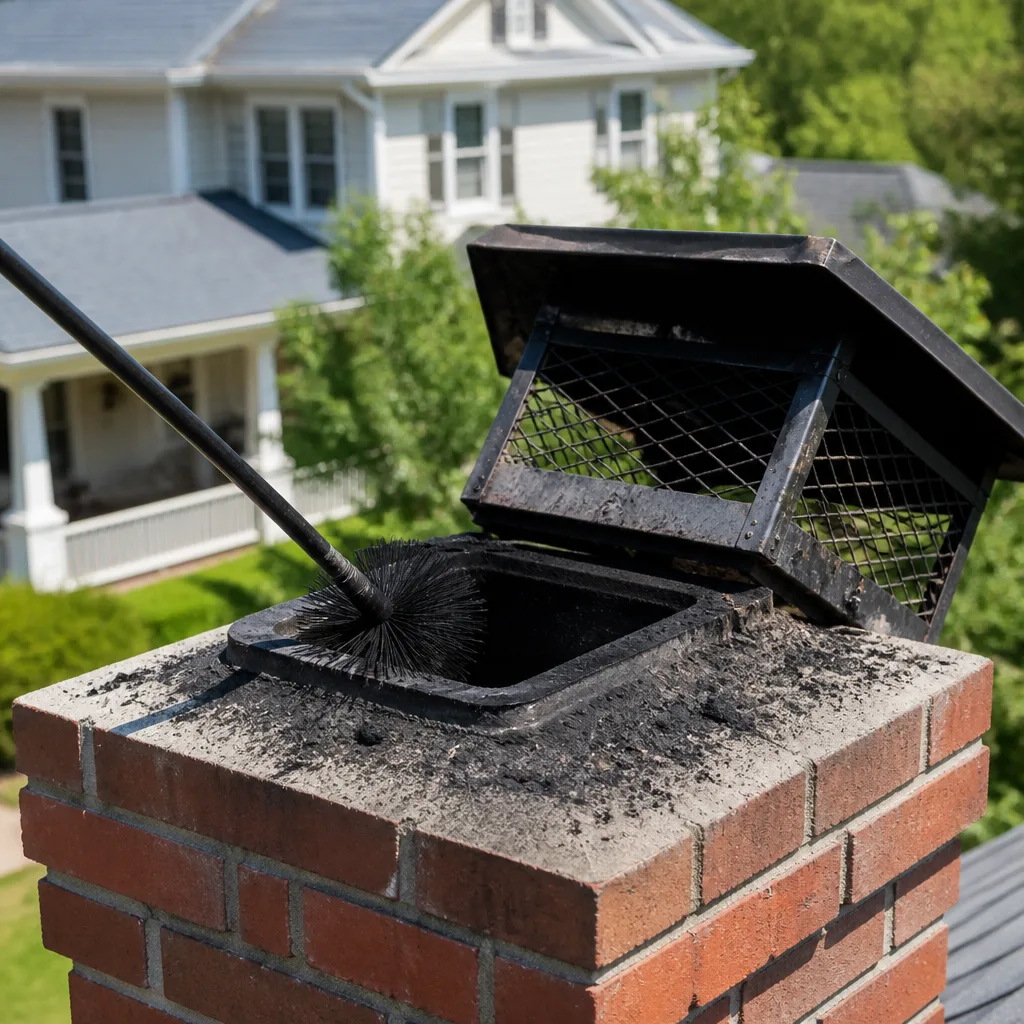
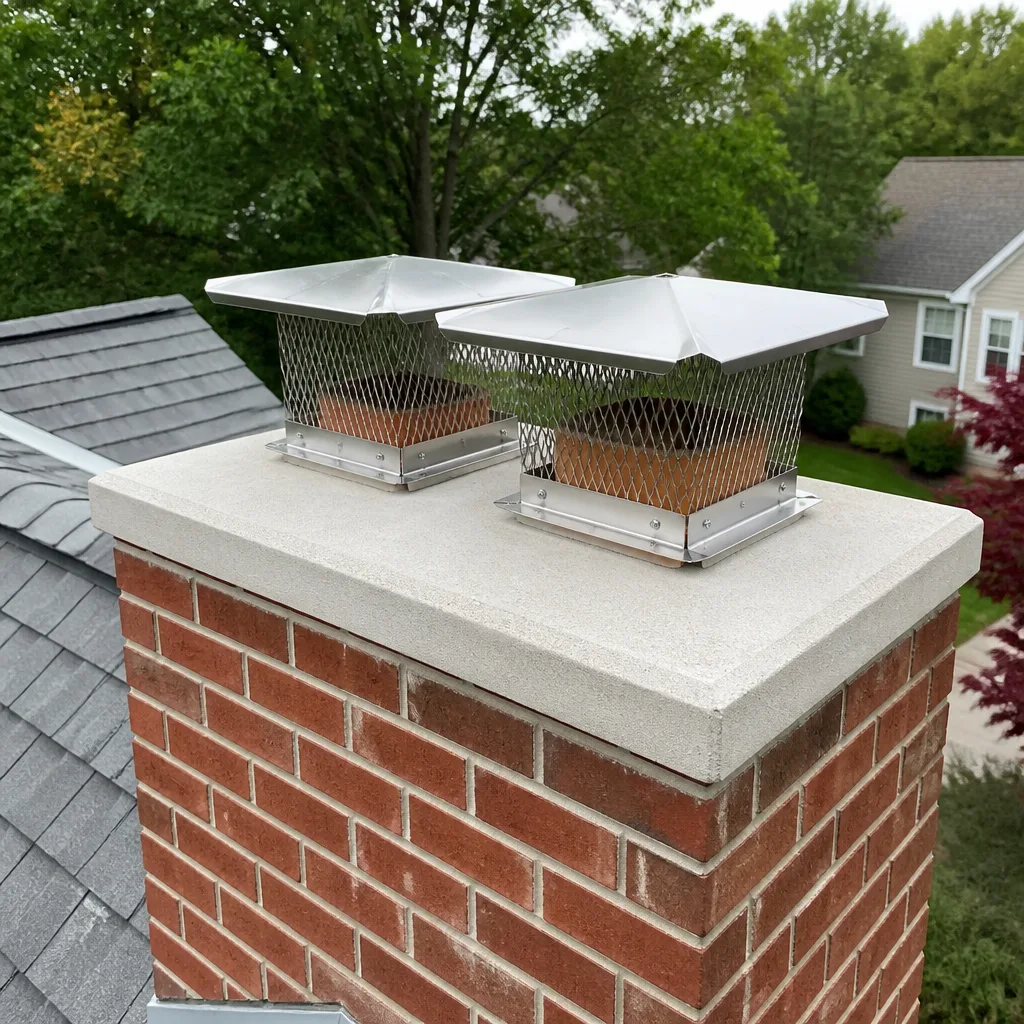
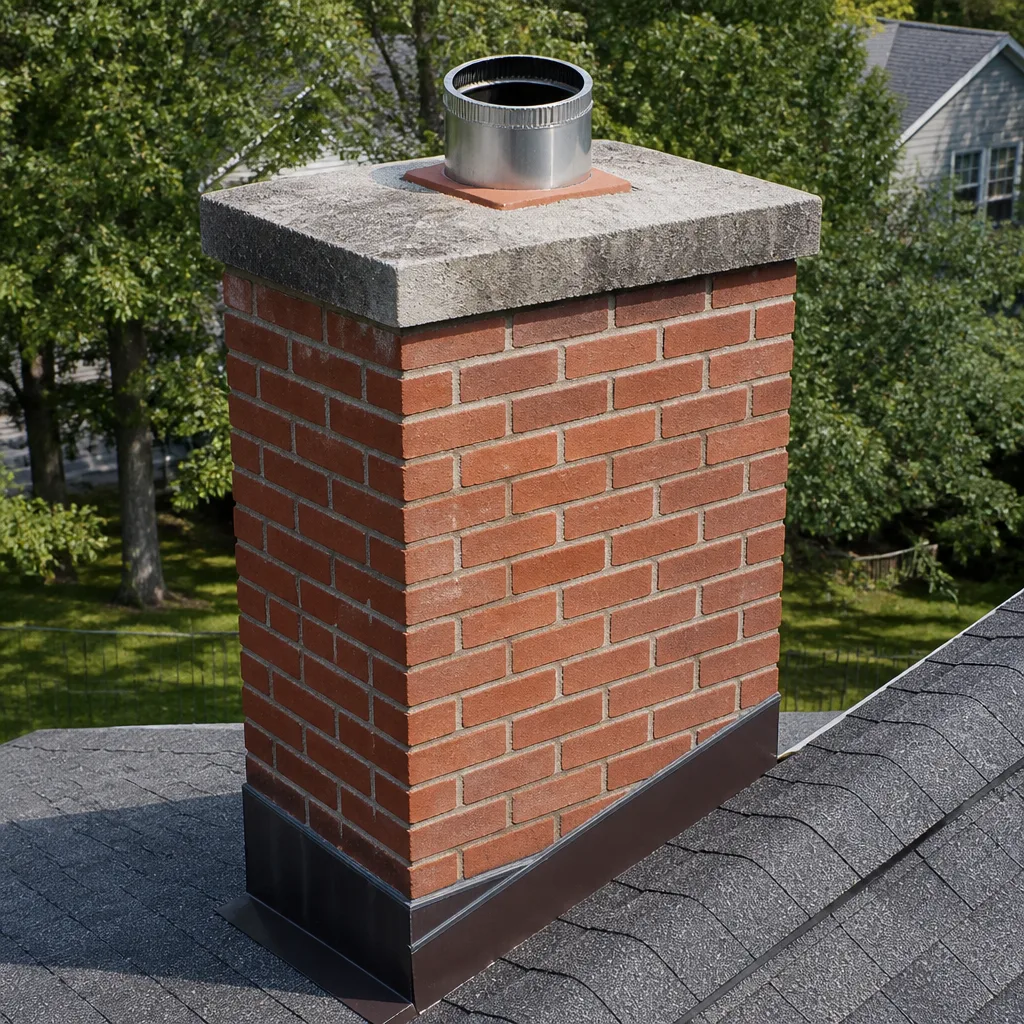
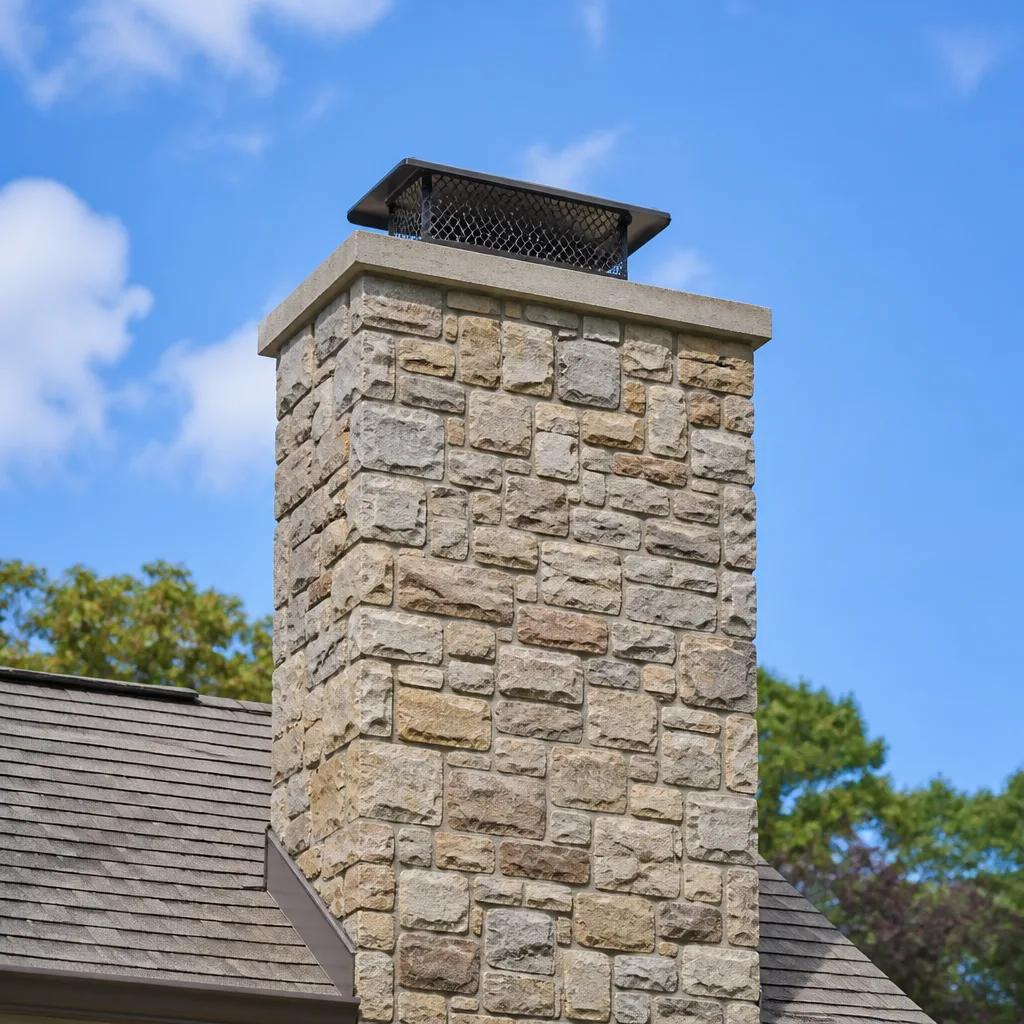
Level 1 sweep and inspection to the NFPA 211 annual standard - flue, crown, cap, and flashing checked and photographed
Chimney sweep logs do not sweep chimneys. They loosen some creosote - which then falls where a brush and vacuum still have to collect it.
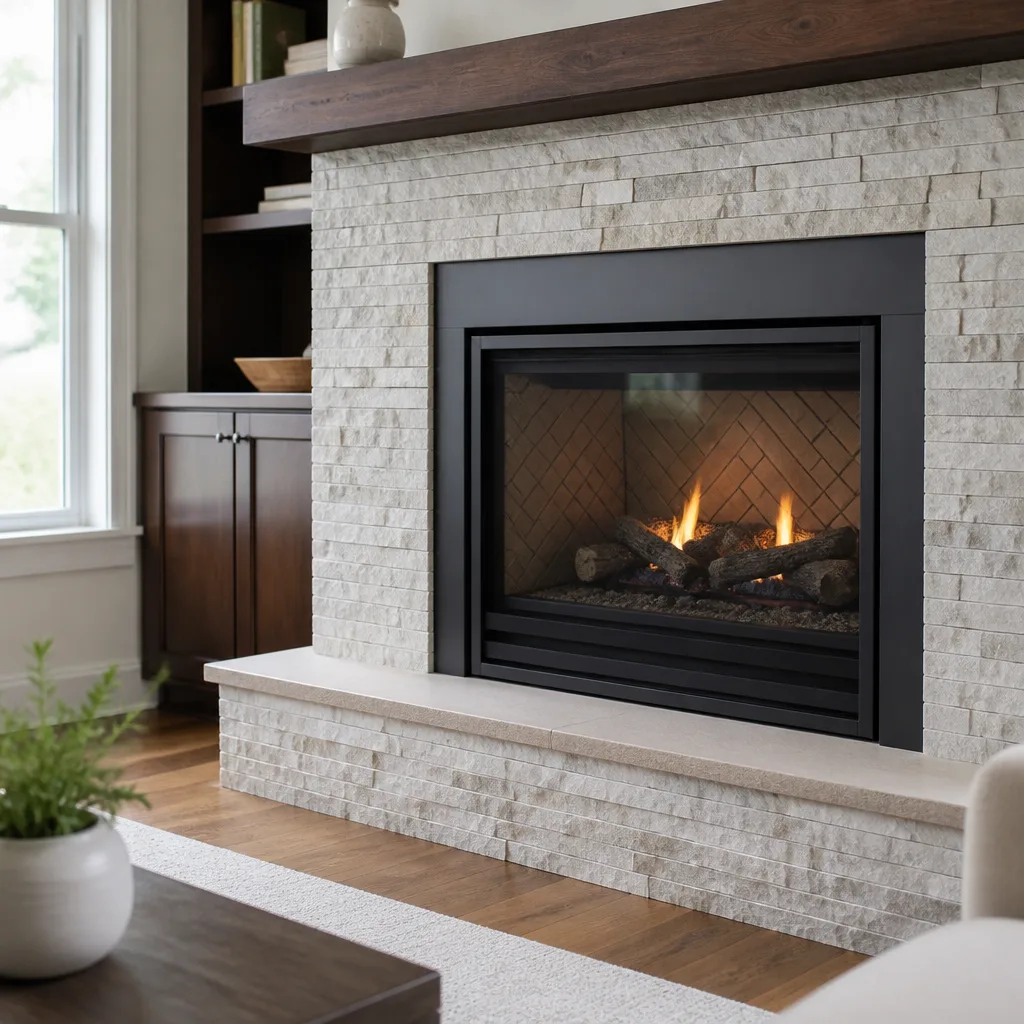
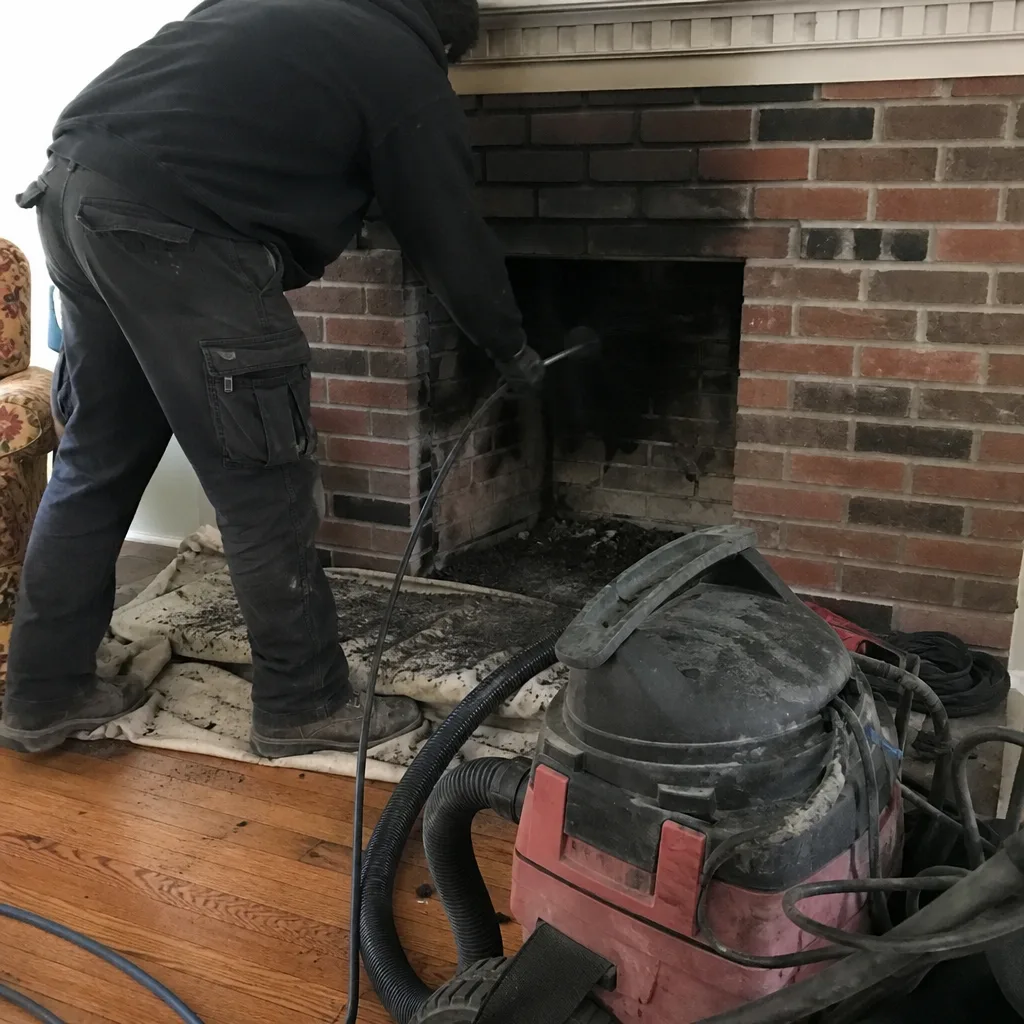 Before
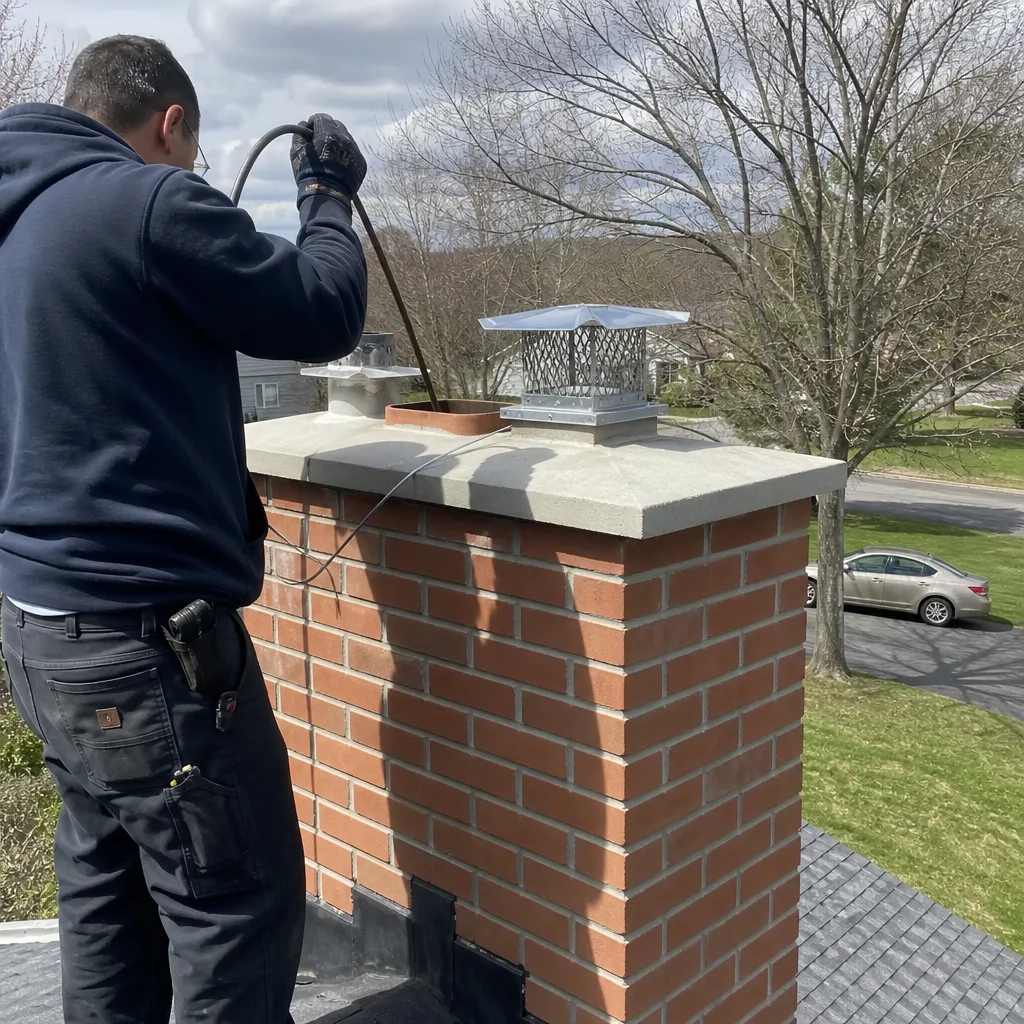 After
After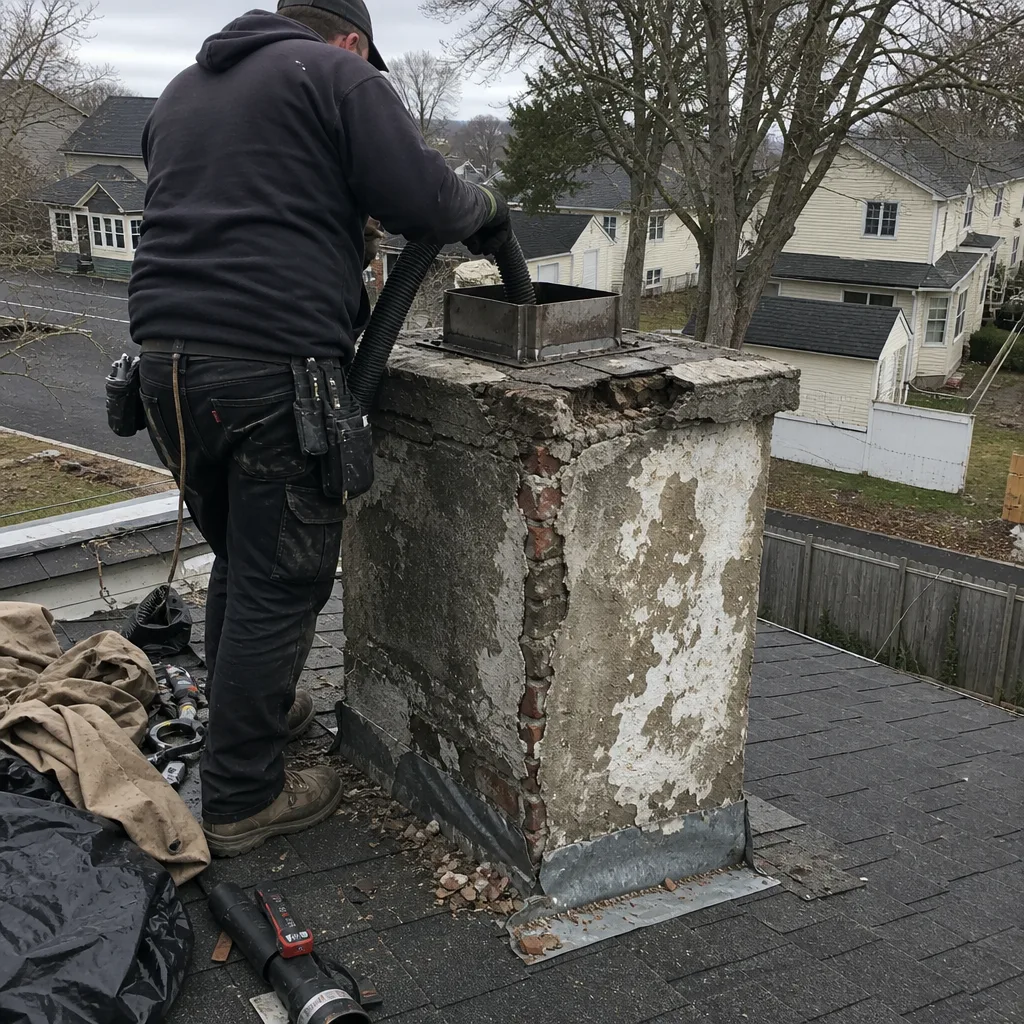 Before
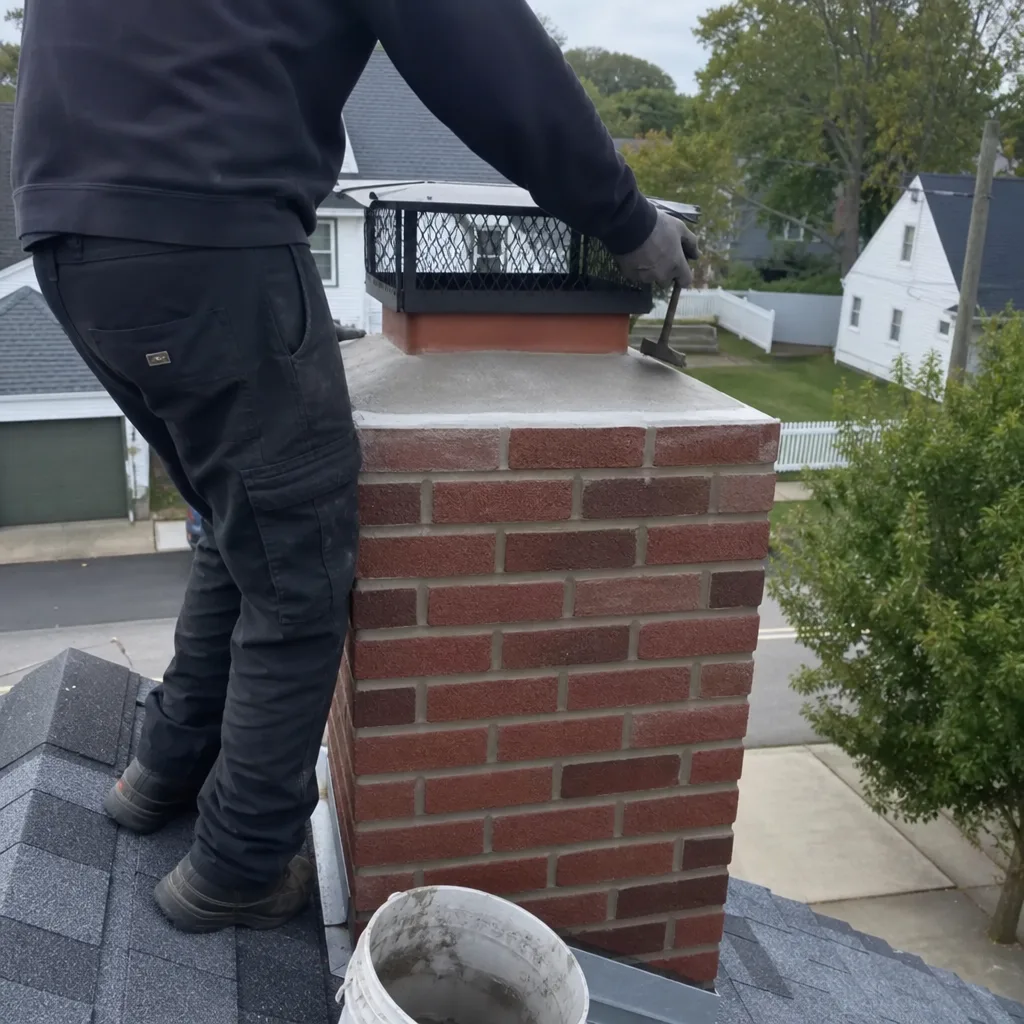 After
After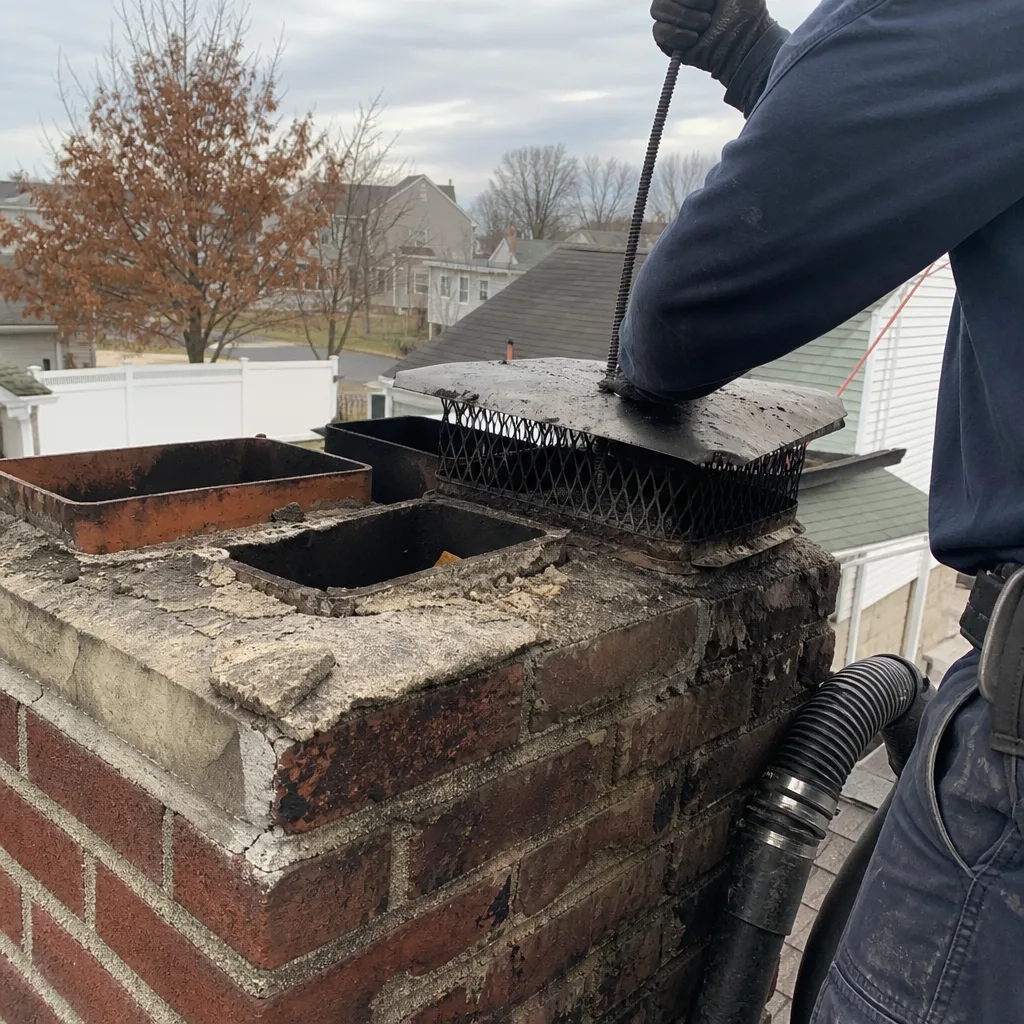 Before
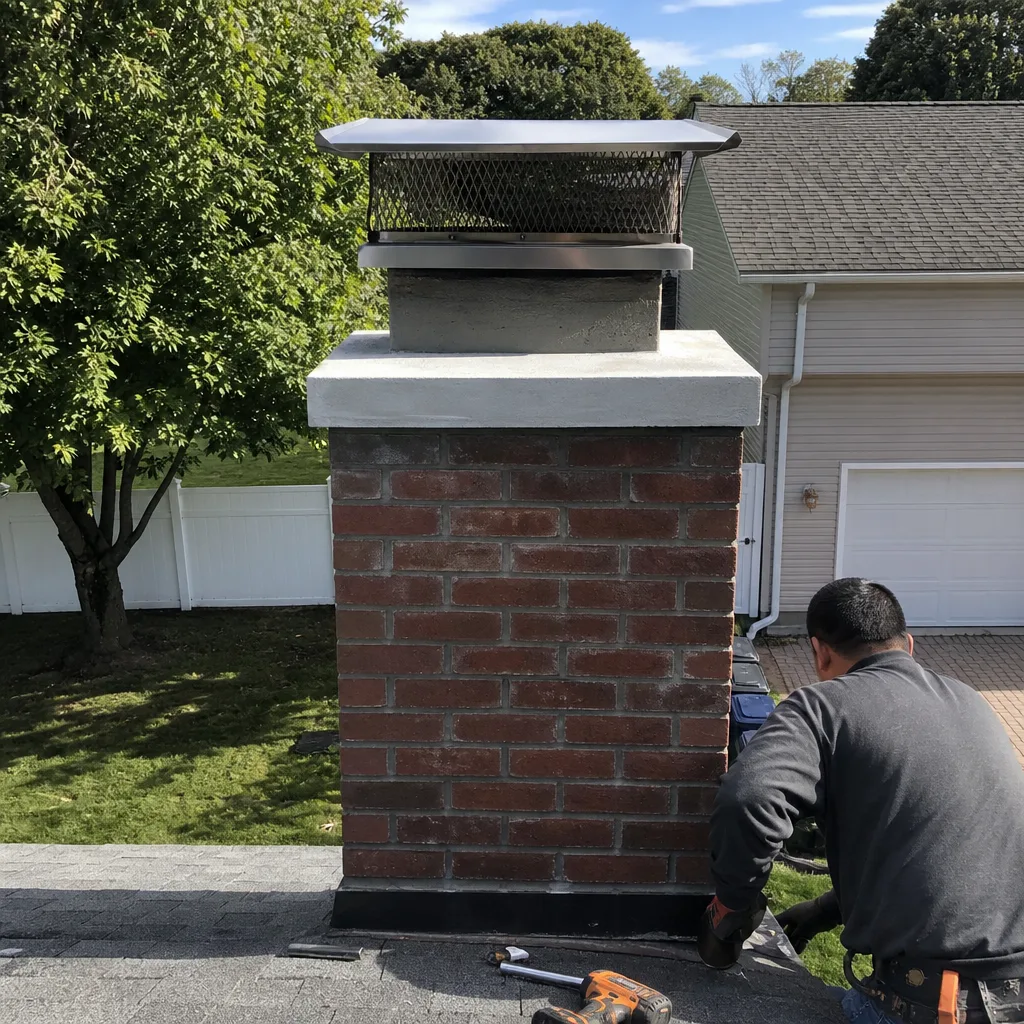 After
AfterSeasonal Chimney Cleaning Care for Freeport: Year-Round Homeowner’s Guide
Summer is the season most Freeport homeowners ignore their chimney entirely. It’s also the season when moisture sits in the flue, accelerates liner deterioration, and gives birds and wasps the longest uninterrupted window to build inside the cap. On the South Shore, each season puts a different kind of stress on a chimney - and treating chimney care as a single annual event means three seasons of preventable damage accumulate before anyone looks. This guide maps the actual seasonal threats in Freeport’s coastal climate to specific actions homeowners should take month by month, and you can explore more guides & resources for year-round chimney care.
Quick Answer
Freeport homeowners should treat chimney care as a four-season maintenance cycle: spring inspection for freeze-thaw mortar damage, summer cap and damper sealing against moisture and pests, early fall sweeping before the October rush, and a mid-winter check during heavy burning. In Freeport’s humid coastal climate near Great South Bay, this schedule - detailed in our Chimney Cleaning & Sweep Maintenance Checklist for Freeport Homeowners - prevents accelerated liner corrosion, pest intrusion, and dangerous creosote buildup that inland Nassau County homes experience more slowly.
Table of Contents
- Spring: Repairing What Winter Broke
- Summer: The Hidden Damage Season
- Fall: The Only Window That Matters for Scheduling
- Winter: Burning Smart, Burning Safe
- Why Freeport’s Coastal Climate Changes Everything
- Your Year-Round Chimney Maintenance Checklist
- Common Mistakes to Avoid
- When to Call a Professional
- Frequently Asked Questions
- The Bottom Line
Spring: Repairing What Winter Broke
By March in Freeport, your chimney has endured four months of heating cycles, freeze-thaw stress, and wind-driven salt air. The damage is often invisible from the ground - and that’s the problem.
Here’s what happens during a Long Island winter: moisture seeps into hairline cracks in mortar joints, freezes overnight, and expands with enough force to widen those cracks by thirty percent or more. By spring, a joint that looked sound in October can be spalling, crumbling, or missing entirely. We’ve found this pattern consistently in Freeport neighborhoods from Merrick Road north to the bayfront, where older brick construction and sustained heating use create the perfect conditions for accelerated joint failure.
A spring exterior inspection serves two purposes. First, it catches mortar damage before summer humidity penetrates deeper into the chimney structure. Second, it documents the chimney’s condition before the heavy pest and moisture season begins.
What to check in spring:
- Visual scan of the crown for cracks or pooling areas from the ground with binoculars
- Check for white efflorescence on exterior brick - a sign of moisture migration
- Look for displaced or missing chimney cap
- Note any new gaps between flashing and roofline
- Schedule a Level-2 camera inspection if the chimney is over 15 years old or if you burned more than two cords of wood
In our experience, Freeport homeowners who address crown and mortar issues in April save an average of forty percent versus waiting until fall, when demand peaks and minor repairs have often become major rebuilds. The freeze-thaw cycle doesn’t pause for your schedule.
One more spring consideration specific to this area: Nassau County’s proximity to the ocean means our freeze-thaw cycles are more frequent and more severe than inland zones. Temperatures in Freeport can swing twenty degrees in a single March day, creating multiple freeze-thaw events in 24 hours. That frequency multiplies the damage.
Summer: The Hidden Damage Season
June through August is when most chimney damage actually accelerates - quietly, out of sight, while the fireplace sits cold.
The threat is moisture, and in Freeport it arrives from two directions. Rain and humidity enter from above. Ground moisture and bay-effect humidity push from below and the sides. A chimney that was marginally dry in winter becomes saturated in summer, and that saturation activates chemical processes in creosote residue that corrode metal liners and degrade masonry.
Here’s the mechanism we see documented in our camera inspections: residual creosote, even in a “clean” flue, is hygroscopic - it absorbs atmospheric moisture. In Freeport’s baseline humidity, which runs fifteen to twenty percent higher than central Nassau County year-round, that absorption happens faster and deeper. The resulting acidic compound eats at stainless steel liners and clay flue tiles alike. A liner that showed minor pitting in spring can show measurable wall thinning by September.
Summer is also the primary pest intrusion window. Uncapped chimneys in Freeport attract chimney swifts (protected by federal law - removal requires special handling), European starlings, and wasp colonies that can build nests large enough to partially block the flue. We’ve removed nests in August that completely filled the upper flue, built during the twelve-week window when no fire was burning.
Summer action items:
- Verify your chimney cap is secure, properly sized, and has intact mesh sides - not just a rain pan
- Test the damper seal: close it fully, hold a lit incense stick near the firebox opening, and watch for smoke drift upward (indicating a poor seal)
- Schedule any needed crown or flashing repairs before hurricane season peaks
- Consider a top-sealing damper if your throat damper is original equipment and showing corrosion - Gelco and Olympia Chimney both manufacture units we install regularly in Freeport homes
- Document exterior condition with dated photos for comparison next spring
The damper deserves particular attention. A throat damper in a coastal environment has a working life of roughly fifteen to twenty years before corrosion compromises the seal. A failed damper in summer means conditioned air escapes up the flue. In winter, it means heat loss and downdraft problems. The test takes two minutes and costs nothing.
Fall: The Only Window That Matters for Scheduling
Every year, the same pattern: Freeport homeowners call in mid-October, after the first cold night, and find appointment slots two to three weeks out. By then, they’re burning anyway - unswept, uninspected, and hoping for the best.
The correct scheduling window for Freeport is late August through mid-September. Here’s why this matters beyond simple convenience.
First, the coastal heating calendar. Freeport’s location on Great South Bay means temperature drops lag inland areas by roughly ten days, but when they drop, they drop fast. The first sustained cold snap typically arrives the last week of September, and homeowners light up within 48 hours of feeling it. Pre-season sweeping ensures the first fire of the year is safe, not a test of how much creosote survived last winter.
Second, inspection findings require lead time. If your Level-2 inspection reveals liner damage, crown deterioration, or flashing failure, repairs take scheduling and curing time. A September discovery allows October completion. An October discovery means November burning in a compromised system - or burning while waiting, which is what most people do.
Third, demand compression. Freeport has approximately 14,000 single-family homes and a finite number of qualified sweeps serving the South Shore. The October appointment crunch is predictable and avoidable.
What fall service should include:
- NFPA-211 compliant sweeping with HEPA containment
- Level-2 internal camera inspection with photos provided to the homeowner
- Written condition assessment with prioritized recommendations
- Combustion analysis if you have a gas insert or log set
- Cap, crown, and flashing verification
At Chimney Cleaning & Sweep in Freeport, we complete most sweeps in a single visit, with no-hassle upfront pricing - the number on the estimate is the number on the invoice. But we can’t create calendar days in October. The homeowners who call in September get thorough service at their convenience. Those who wait take their chances.
Winter: Burning Smart, Burning Safe
Once the season starts, most homeowners assume the work is done. In our experience, that’s when the real monitoring begins - especially for households burning more than three times weekly.
Freeport’s winter pattern creates specific risks. Extended cold snaps, particularly January through mid-February, push heating systems to continuous operation. Wood-burning fireplaces that see occasional weekend use in November become daily heat sources by January. That frequency change matters because creosote accumulation is non-linear: the tenth fire of the season deposits more creosote than the first, because the flue surface is already conditioned and cooler.
The mid-season check heavy users should perform:
- Visual inspection of the firebox for cracked or spalling brick, which indicates heat transfer problems
- Check for smoke spillage at startup - any delay in draft establishment suggests flue restriction
- Monitor for unusual odors: acrid or tar-like smells indicate active creosote buildup
- Inspect visible portions of the liner (through the damper opening) for glaze or heavy deposits
- Verify carbon monoxide detectors are functional and properly positioned
Carbon monoxide deserves specific attention. A blocked or partially restricted flue in winter doesn’t just create fire risk - it creates poisoning risk. Freeport’s tight construction in post-war homes, many with updated windows and insulation but original chimneys, means negative pressure issues are common. A fireplace that drafted adequately in a leaky house may fail to draft in a tightened one. The detector is your backup, not your primary protection.
One practical note: during extended cold snaps, avoid over-firing. Loading a small firebox with excessive wood to “get more heat” overheats the firebox and damages surrounding masonry. It also increases creosote formation by cooling the upper flue through excessive volume. Burn smaller, hotter fires with seasoned hardwood - not the construction debris or driftwood that some Freeport waterfront homeowners collect.
If you notice performance changes mid-season - harder starts, smoke odor, reduced heat output - don’t wait for spring. These are active symptoms of a developing problem. Chimney Repair in Freeport becomes necessary when symptoms appear, not when the season ends.
Why Freeport’s Coastal Climate Changes Everything
Generic chimney advice fails in Freeport because it assumes inland conditions. The specific geography of this area - barrier island proximity, bay-effect humidity, salt-laden air, and soil chemistry - creates a distinct maintenance profile.
Humidity baseline and creosote chemistry
Great South Bay moderates Freeport’s temperature but elevates its humidity. Annual average relative humidity here runs 68-72%, compared to 58-62% in central Nassau County. That baseline difference changes how creosote behaves in your flue.
Creosote exists in three stages. Stage 1 is flaky soot, easily swept. Stage 2 is granular, requiring rotary tools. Stage 3 is glazed, tar-like, and requires chemical treatment or mechanical removal. The progression from 1 to 3 is driven by condensation - smoke cooling below its dew point and depositing liquid residue that bakes onto the flue wall. Higher humidity in the flue air lowers that dew point. In Freeport’s climate, a given burning pattern produces Stage 2 or 3 creosote faster than the same pattern in a drier location.
This is why we recommend more frequent sweeping for Freeport homes with heavy use - not because the homeowner is doing anything wrong, but because the environment accelerates the chemical process.
Salt air and metal corrosion
Stainless steel chimney liners are rated for coastal use, but not all stainless is equal. The 316Ti alloy used in quality liners like HeatShield and DuraFlex resists salt corrosion. Lower-grade 304 stainless, found in some budget installations, shows pitting within five to seven years in Freeport’s environment. When we document liner condition, we’re specifically evaluating for this pattern.
Soil and foundation moisture
Freeport’s water table sits high, particularly in neighborhoods south of Sunrise Highway. Chimney foundations in these areas experience more moisture exposure, which wicks upward through masonry and accelerates spalling at the base. A chimney that looks sound at the roofline may show critical deterioration at the foundation level - visible only from the basement or crawl space.
Wind exposure
South Shore chimneys face sustained onshore winds that inland chimneys don’t. This affects cap selection - standard rain pans fail in wind-driven rain, while properly engineered wind-directional caps from Famco deflect it. It also affects draft performance on high-wind days, which is why we verify draft under varying conditions during fall inspection.
The practical implication: a maintenance schedule adequate for Syosset or Hicksville is insufficient for Freeport. The environment here demands more frequent inspection, higher-grade materials, and specific attention to moisture management.
Your Year-Round Chimney Maintenance Checklist
This checklist compresses everything above into actionable items by season. Print it, date the completions, and keep records - documentation helps with insurance claims, home sale disclosures, and warranty coverage.
March-April (Spring)
- Schedule post-winter exterior inspection
- Photograph crown, cap, and visible masonry for comparison
- Address any mortar or crown cracks before summer moisture
- Review winter burning notes for performance changes
June-July (Summer)
- Verify cap security and damper seal
- Check for pest activity or nesting signs
- Complete any pending repairs from spring inspection
- Consider top-sealing damper upgrade if throat damper is aging
August-September (Fall - Critical Window)
- Schedule sweeping and Level-2 inspection by September 15
- Receive and review photo documentation and written assessment
- Complete all recommended repairs before first fire
- Test smoke and CO detectors
December-February (Winter)
- Monitor for smoke spillage, odor changes, or draft problems
- Perform mid-season visual check if burning more than 3x weekly
- Adjust burning practices during extended cold snaps
- Call for service if any performance change occurs - don’t wait for spring
Records matter. Our 90-Day Done Right Promise covers work we perform, but documentation of annual maintenance supports manufacturer warranties on liners and caps, and it’s required by most homeowner insurance policies in the event of a chimney fire claim.
Common Mistakes to Avoid
- Waiting for October to schedule. By then, qualified sweeps in Freeport are booked two to three weeks out, and you’re burning unswept while you wait - or skipping inspection entirely.
- Assuming no fire means no problem in summer. Moisture, pests, and liner corrosion all accelerate during the off-season. The chimney doesn’t pause degrading just because you’re not using it.
- Accepting a sweep without camera inspection. Visual-only sweeping misses liner damage, hidden creosote buildup, and internal mortar deterioration. Insist on photo documentation you can see yourself.
- Burning green or unseasoned wood. Wood with moisture content above 20% creates excessive creosote and wastes heat. In Freeport’s already-humid environment, this compounds the moisture problem. Buy seasoned hardwood or dry your own for eighteen months minimum.
- Ignoring the damper. A corroded or misaligned damper wastes energy year-round and creates downdraft problems in winter. The seal test takes two minutes and reveals problems that cost hundreds in lost efficiency.
- Using off-brand or improper materials for repairs. Generic caps, uncured crown coatings, and incompatible mortars fail prematurely in coastal conditions. We use professional-grade materials from HeatShield, Gelco, Olympia Chimney, and Famco because they’re engineered for this environment.
- Treating chimney maintenance as a single annual event. The four-season approach in this guide exists because each season presents distinct threats. Addressing them as they arise prevents the compounding damage that creates four-figure repair bills.
When to Call a Professional
Some situations require immediate professional evaluation. Call a qualified sweep if you notice smoke entering the room at any point during operation, a persistent tar-like odor from the fireplace, visible cracks in the firebox or exterior masonry, water staining on walls or ceiling near the chimney, or a carbon monoxide alarm activation near the fireplace.
Additionally, any chimney that has experienced a chimney fire - even a small one - needs Level-2 inspection before further use. The thermal shock can crack liners and damage masonry in ways not visible without camera examination.
Hearthstone Chimney Co. offers free estimates in Freeport. Our technicians are background-checked and uniformed, and most jobs are completed in a single visit. Call (631) 735-5125 to schedule, or reach us through our Hearthstone Chimney Co. home page. A live person answers every call, 24 hours a day, 7 days a week - not a voicemail, not a callback queue.
Frequently Asked Questions
A standard chimney sweeping with Level-2 camera inspection in Freeport typically ranges from $225 to $375, depending on flue accessibility, the number of appliances served, and whether creosote removal requires rotary rather than standard brushing - see our Chimney Cleaning Cost Breakdown: The Freeport Homeowner’s Reference for 2026 for full pricing details. Our $89 Seasonal Tune-Up offers a limited introductory option for qualifying systems. Call (631) 735-5125 for an exact quote - estimates are free, and the number we quote is the number on the invoice.
The National Fire Protection Association recommends annual inspection for all chimneys, with sweeping frequency determined by use. In Freeport’s humid coastal climate, we recommend annual sweeping for any fireplace burned more than thirty times per season, or any gas appliance with a shared flue. Heavy wood burners - more than three cords annually - should consider mid-season inspection. The humidity here accelerates creosote progression beyond what NFPA’s general guidance assumes.
This is the most common question we hear, and it’s why we document everything with photos you can see and a plain-English verdict. No liner replacement should be recommended without camera evidence of cracking, spalling, or measurable wall thinning. At Hearthstone Chimney Co., we’ll also tell you plainly when damage is minor enough to monitor rather than replace, and when work can safely wait a season. Our Freeport estimates include the photos, the measurements, and the explanation - not just a recommendation.
Skipped maintenance leads to three predictable outcomes, in order of severity: progressive efficiency loss and higher heating costs as the flue narrows with creosote; liner and masonry damage from moisture and acid corrosion that compounds repair costs; and chimney fire or carbon monoxide exposure from blocked or damaged flues. In Freeport specifically, the coastal humidity accelerates all three timelines. The cost of annual maintenance is a fraction of the cost of rebuilding a fire-damaged chimney or remediating CO exposure.
We do not recommend DIY sweeping for Freeport homeowners. Beyond the physical difficulty of proper rotary brushing and the risk of roof work, amateur sweeping commonly misses liner damage, fails to achieve complete creosote removal (particularly Stage 3 glaze), and creates hazardous dust exposure without proper HEPA containment. More critically, insurance claims and home sale disclosures typically require professional service documentation, as outlined in Chimney Cleaning Permits, Codes & Inspections in NY: What You Need to Know. The savings are minimal; the downside exposure is substantial.
Summer odor typically indicates one of three conditions: creosote deposits absorbing humidity and releasing acidic compounds (the most common cause in Freeport’s climate), animal intrusion or nesting material decomposition, or negative air pressure drawing downdraft through a failed damper seal. The specific cause determines the remedy - improved sweeping, pest removal and cap repair, or damper replacement. A summer inspection identifies which applies to your system.
The Bottom Line
Freeport’s coastal location creates a chimney maintenance profile distinct from inland Nassau County. The four-season approach - spring exterior repair, summer moisture and pest defense, early fall sweeping before demand peaks, and winter performance monitoring - prevents the compounding damage that turns minor maintenance into major rebuilds. The homeowners we serve longest are those who treat chimney care as continuous, not annual. Done right, and we stand behind it. That’s the Keystone Standard we’ve operated under since 1984.
For Fireplace Services in Freeport or any chimney need, call Hearthstone Chimney Co. at (631) 735-5125. Estimates are free, calls are answered by a live person 24/7, and every job is backed by our 90-Day Done Right Promise in writing - no arguing, no paperwork, just the thing done correctly.
Written by Russell Haines, Owner at Hearthstone Chimney Co., serving Freeport since 2014.